Why the Hadrian x Bricklaying Robot Matters in Smart Construction
McKinsey informed that worldwide construction projects accounted for almost $13 trillion in gross annual output in 2023. In other words, construction projects represented about 7% of worldwide gross output. McKinsey projects up to 70% sector growth by 2040, despite existing labor shortages for critical roles like engineers, project managers, and craft workers. This is the reason that the Hadrian x bricklaying robot is gaining attention as a serious construction automation solution for housing, masonry, and smart infrastructure projects.
The Hadrian x bricklaying robot represents a change from traditional hand-laid masonry to robotic block laying guided by digital design data. The goal for contractors, developers, and infrastructure planners, is not only speed. The greater significance is reliability, decreased repetitive manual work, better planning, and stronger control over cost and schedule.
What Is the Hadrian x Bricklaying Robot?
The Hadrian x bricklaying robot is an automated robotic masonry system developed by FBR. The purpose is to lay bricks or blocks using digital wall designs, robotic control, and a long telescopic boom. FBR explains Hadrian as a robotic construction system that is capable of building structural, load-bearing walls of a brick or block house in a short time not more than a day.
The term Hadrian x is also frequently searched online. It mostly refers to the same Hadrian X technology. In simple words, the machine reads a digital wall plan, picks up blocks, applies bonding material, positions each block, and builds wall sections with robotic accuracy.
Unlike a simple brick laying machine, the Hadrian x bricklaying robot is not simply a mechanical aid. It is a digitally controlled construction robot that relates design information with physical site execution.
How the Hadrian x Robot Works
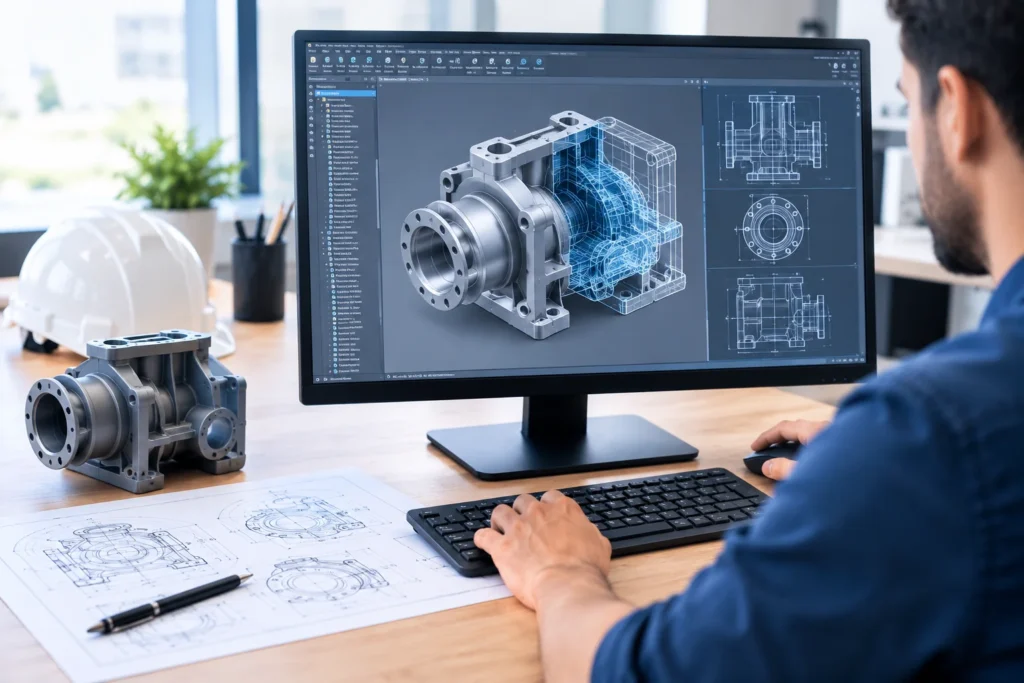
The Hadrian x robot works by transforming a wall design into machine instructions. The system uses software, block handling, robotic positioning, and a boom-mounted layhead for placing blocks according to the digital model.
The typical working order includes:
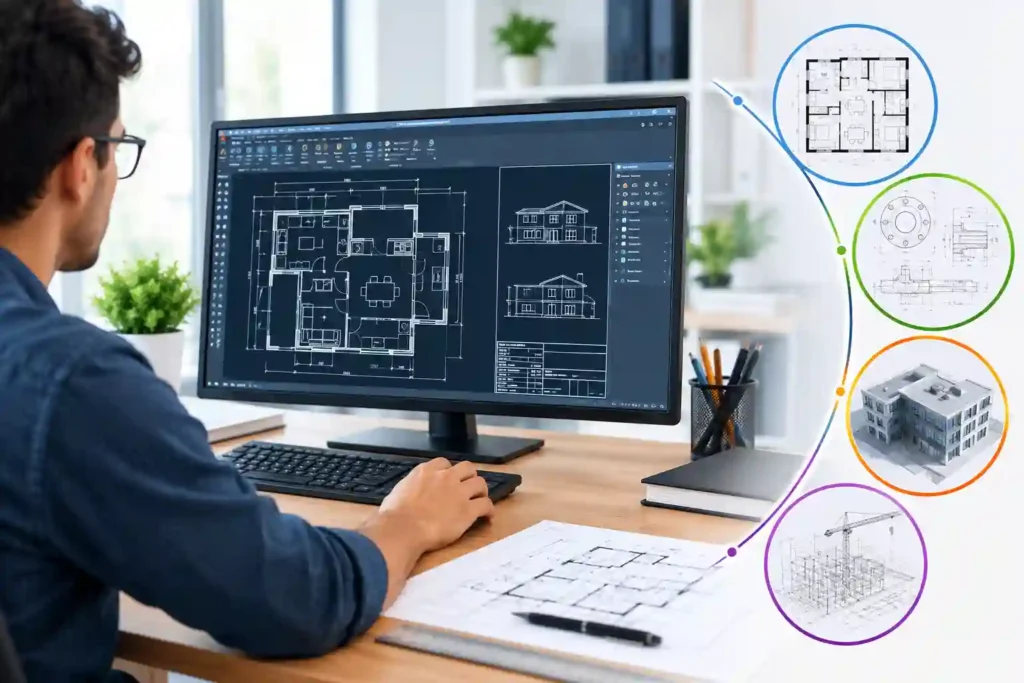
- Digital design or CAD/BIM wall model preparation
- Conversion of the wall layout into block positions
- Loading of blocks into the system
- Automatic cutting where required
- Block transportation through the boom
- Adhesive application
- Robotic placement and alignment
- Quality checks and repeat placement
FBR’s approved material explains that its software translates wall sketches into block positions and uses a single source of data for the building process. The same material also explains that blocks are loaded into the machine, cut where needed, moved through a dynamically stabilized boom, and placed with adhesive rather than traditional mortar.
Understanding Bricklaying Robots in Construction
Bricklaying robots are robotic systems designed to automate part of the masonry procedure. Some systems support workers by decreasing lifting and positioning effort. Others, like the Hadrian x robot, aim to automate larger parts of wall construction.
The rise of bricklaying robots is part of a broader automation inclination. The International Federation of Robotics stated that 542,000 industrial robots were installed worldwide in 2024. This figure is more than double the number installed ten years earlier. Professional service robot sales also escalated by 9% in 2024. These figures indicate that automation is moving into more industries, that also include construction-related applications.
For masonry, bricklaying robots are particularly effective where wall designs are repetitive, construction volume is high, and the site can be planned around robotic operation.
What Makes Hadrian x Different from a Traditional Brick Laying Machine?
A traditional brick laying machine may help with moving, aligning, or placing masonry units. However, it still depends heavily on manual control. Hadrian X is different because it applies digital information, robotic positioning, and stabilization technology to automate block positioning.
FBR declares that the system uses Dynamic Stabilization Technology, or DST, for correcting movement and vibration in real time so that the robot can lay blocks outdoors with accuracy. Its current Hadrian system is also labelled as having a 32-metre telescopic boom and a maximum lay speed of 360 blocks per hour, depending on project conditions and system setup.
This makes the Hadrian x bricklaying robot more than a traditional brick laying machine. It is a robotic construction platform that is designed for repeatable masonry production.
What Is FBR Bricklaying Robot Grout?
Many readers search for FBR bricklaying robot grout because they like to know what bonding material Hadrian X uses between blocks. In traditional masonry, workers generally use mortar. In the Hadrian X system, FBR describes Fastbrick Adhesive as the bonding agent.
In FBR’s official page “Fastbrick Adhesive” is listed as the bonding agent for Hadrian, while FBR’s printed material explains that an advanced construction adhesive is applied instead of traditional mortar. It also says that the adhesive helps the machine to build nonstop rather than waiting for mortar to dry.
Therefore, FBR bricklaying robot grout should be understood thoroughly. The correct project-specific bonding material should be confirmed through FBR documentation, engineering specifications, and local building code approval.
Key Features of the Hadrian x Bricklaying Robot
The Hadrian x bricklaying robot contains several important features that make it appropriate for robotic masonry. These consist of digital model-based control, automated block handling, robotic placement, adhesive application, dynamic stabilization, and a telescopic boom.
FBR explains its Shuttle Block Delivery System as being designed for current commercially available blocks as well as larger blocks up to 600 mm × 400 mm × 300 mm and 45 kg. The system also contains modular design features, a saw module for cutting blocks, and a distributed control architecture for easier module customization and repair.
These features demonstrate why the Hadrian x robot is relevant for construction automation. It brings together mechanical handling, digital control, and robotic placement into one masonry workflow.
Applications of Bricklaying Robots in Smart Infrastructure Projects
Bricklaying robots can take many project types where walls or block structures are repeated. Residential housing is one of the most discussed applications because repeated house layouts can design strong automation value. Affordable housing schemes can also benefit where speed, repeatability, and labor availability are foremost concerns.
Besides housing schemes, other structures like commercial buildings, schools, public buildings, boundary walls, industrial buildings, smart city developments, and disaster recovery housing can also use robotic masonry where project design supports automation.
For smart infrastructure, the major benefit is predictability. Bricklaying robots can support a more controlled construction sequence where the design data is clear and the site is ready. Skilled masons and site engineers may still be necessary for complex details, inspection, finishing, services combination, and quality assurance.
Advantages of Using a Hadrian x Bricklaying Robot
The Hadrian x bricklaying robot provides numerous potential advantages for suitable projects. It can decrease repetitive manual labor, improve reliability, support faster wall construction, and improve planning through digital data.
Autodesk’s coverage of Hadrian X observes that specialty software and algorithms can provide support to a single source of data for estimating blocks and adhesive needs. It also explains that the system uses CAD-based information for defining brick metadata and placement coordinates.
The major advantages comprise:
- More reliable block placement
- Reduced repetitive lifting and manual bricklaying
- Reliable planning from digital wall data
- Potential decrease in waste
- Improved schedule certainty in appropriate projects
- Better use of competent labor for supervision and quality control
The advantages depend on design suitability, site preparation, trained operators, material supply, local approval, and machine utilization.
Traditional Bricklaying vs Robotic Bricklaying
Traditional bricklaying depends on experienced masons. It is flexible, widely understood, and appropriate for small or complex jobs. On the other hand, robotic bricklaying depends on digital planning, machine setup, trained operators, and repeated wall layouts.
| Factor | Traditional Bricklaying | Robotic Bricklaying |
|---|---|---|
| Labor demand | High | Lower repetitive labor |
| Speed | Depends on crew skill and fatigue | More consistent in suitable projects |
| Setup cost | Low | Higher |
| Accuracy | Skill-dependent | Digitally controlled |
| Best use | Small and complex jobs | Repetitive and large-scale projects |
| ROI | Crew-based | Utilization-based |
Both methods may coexist. A Hadrian x bricklaying robot may manage repeated wall sections, while human workers may accomplish complex detailing, finishing, openings, services, and site adjustments.
Hadrian x Bricklaying Robot Price: Cost Factors and ROI
Exact Hadrian x bricklaying robot price is not commonly available as a simple public retail figure. The cost depends on multiple factors like system configuration, commercial model, project location, deployment method, support package, training, logistics, maintenance, software, warranty, and service agreement.
Contractors should evaluate total cost of ownership, not only Hadrian x bricklaying robot price. The financial review should contain mobilization, operators, maintenance, spare parts, adhesive or block compatibility, site preparation, technical support, and required utilization.
ROI may be greater where a contractor has repeated housing projects, large masonry volumes, labor shortages, and obvious wall designs. Smaller firms may like partnerships, subcontracting, or service-based robotic masonry before direct investment.
Challenges and Limitations of Bricklaying Robots
Bricklaying robots are promising, but they are not appropriate for every project. Significant challenges include high upfront cost, regulatory approval, site access, weather, material compatibility, design complexity, operator training, logistics, maintenance, and addition with MEP openings, lintels, reinforcement, cladding, and finishes.
The Hadrian x bricklaying robot works best when projects are designed for automation from day one. If the project has irregular wall layouts, repeated design changes, difficult access, or unclear approval constraints, the value may decrease.
Future of Hadrian x and Construction Automation
The future of Hadrian x and robotic masonry is connected with BIM, digital twins, AI-assisted construction, smart infrastructure, and automated quality control. Contractors are looking for technologies that enhance productivity with less people per project because construction demand is growing and labor markets is tight.
Hadrian x shows how masonry can shift from manual craft alone to a mixed digital and robotic workflow. The most feasible future may not be fully robot-only construction. It may be a hybrid model where robots perform repetitive heavy work and competent professionals succeed planning, inspection, supervision, services, and finishing.
Conclusion
One of the most important examples of construction robotics in masonry automation is the Hadrian x bricklaying robot. It links digital wall design with automated block placement, adhesive application, and robotic control.
For smart infrastructure projects, bricklaying robots can improve consistency, decrease repetitive labor, support better planning, and establish long-term economic value where project volume justifies automation. However, contractors should carefully evaluate site conditions, approvals, material compatibility, training, and Hadrian x bricklaying robot prices before selecting the technology.