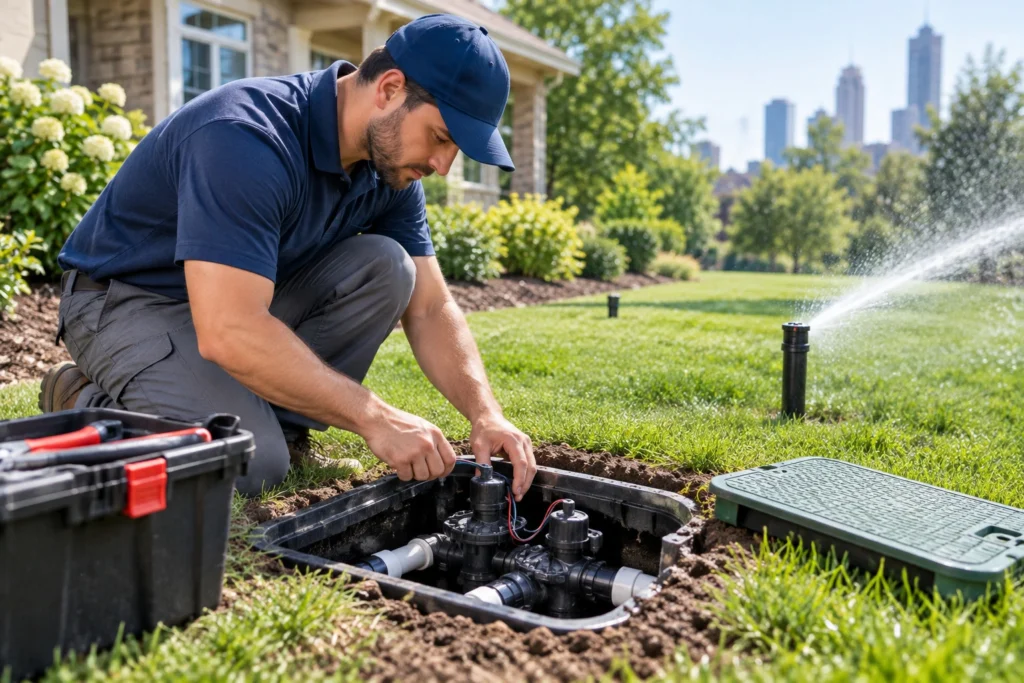
Sometimes, even a small leak in irrigation system can result in a costly utility problem. The U.S. Environmental Protection Agency describes that annually up to 25,000 gallons can go waste due to a poorly maintained automatic landscape system. Furthermore, inefficient irrigation may result in loss of as much as half of outdoor water through runoff, wind, and evaporation.
Homeowners are worried to know:
How Much Does It Cost to Repair a Sprinkler System?
The answer is straightforward as follows:
Fixing a lawn sprinkler in Atlanta averages $270, with average repairs range from $154 to $389. Considering the total cost just about the visible damage isn’t right; factors such as diagnostic time, excavation, wiring, water pressure, and zone repairs all affect the final price.
Sprinkler System Basics Before Irrigation System Repair Atlanta GA
A residential system is a combination of a controller, low-voltage wiring, valve solenoids, a backflow preventer, underground main and lateral pipes, risers, nozzles, and spray or rotor heads. The sequence of working of the system is as follows:
- the controller energizes a solenoid,
- the valve opens,
- pressurized water enters one zone
Pressure denotes the force that makes water move, while flow implies the volume of water delivered over time. Low operating pressure may be due to leakage, clogged nozzles, a restricted valve, undersized pipe, or too many heads. Perfect irrigation system repair Atlanta GA commences with electrical and hydraulic testing instead of random replacement.
Performance is affected by local soil. University of Georgia Extension states that clay subsoil may become compacted, while it is common across Georgia’s Piedmont. Short cycle-and-soak programs, pressure control, and matched nozzles can inhibit runoff better than longer runtimes because clay accepts water at a slow rate.
2026 Atlanta Sprinkler Repair Cost Breakdown
Angi’s June 2026 Atlanta data estimates that average repair cost of breakdown is $270 with a common range of $154 to $389. One local contractor issues the following figures:
- a $165 service fee,
- head replacements from about $35 to $55 after that fee,
- one-inch valve replacement from $155,
- controller replacement around $300,
- electrical troubleshooting at $165 hourly
HomeGuide’s 2026 national ranges deliver a practical cross-check.
| Repair type | Planning range |
|---|---|
| Diagnostic visit or tune-up | $150-$250 |
| First broken head or nozzle | $165-$275 |
| Several heads or coverage corrections | $225-$450 |
| Valve or solenoid repair | $250-$450 |
| Buried lateral pipe leak | $250-$600 |
| Wiring or dead-zone diagnosis | $250-$650 |
| Basic controller replacement | $300-$750 |
| Backflow preventer replacement | $455-$1,710 |
These Atlanta sprinkler repair figures are estimated budgets, and not quotations. Inquire whether the visit fee applies toward labor and whether sod, hardscape, permits, warranties, and final zone testing are added in.
Common Problems that Require Lawn Sprinkler Service and Repair
Geysers, overspray, and dry spots are due to broken or tilted heads. As incompatible nozzles deliver uneven watering; therefore, technicians must match radius, arc, and precipitation rate.
Wet patches, erosion, bubbling, or meter movement may be result of a buried leak. Timely Atlanta sprinkler repair protects soil and roots. When breaks are beneath driveways, walls, or large roots, they cost more to access and restore.
A dead zone may be due to a failed solenoid, cut wire, clogged diaphragm, or closed flow control. Valve debris or diaphragm damage results in a zone that stays dry often. Successful lawn sprinkler systems repair tests voltage and valve operation before digging.
Controller symptoms involve blank displays, lost schedules, fuse failures, or dead zones. EPA WaterSense states that a labeled controller can provide saving up to 15,000 gallons yearly to an average home. However, correct programming and sound field components remain necessary.
Misting implies excessive pressure; weak throw may indicate leakage, blockage, or excess zone demand. Pressure, flow, wiring, and catch-can tests can find and isolate the cause.
What Changes the Price of Atlanta Sprinkler Repair?
- Access: Roots, hardscape, deep valves, fences, and slopes raise labor.
- Diagnosis: Hidden leaks and intermittent wiring defects may take longer than noticeable damage.
- Age: Replacement of brittle pipe and obsolete controllers can be more economical.
- Scale: Numerous failed zones demand more testing and commissioning.
- Timing: Emergency, weekend, and peak-season calls may be more costly.
- Restoration: Trenching may need sod, mulch, edging, or paving repairs.
For consistent lawn sprinkler service and repair, request pricing that quotes separate prices for the service charge, diagnostic labor, parts, excavation, and cleanup.
DIY Versus Professional Lawn Sprinkler Systems Repair
DIY is satisfactory for:
- cleaning a nozzle,
- straightening a tilted head,
- installing an exact replacement nozzle,
- reprogramming a controller
Steps to be taken are:
- shut off irrigation water,
- photograph wiring before disconnection,
- flush debris,
- follow manufacturer specifications
Professional Atlanta sprinkler repair is necessary when:
- water continues after shutdown,
- several zones fail,
- wiring should be traced,
- pressure changes extensively,
- the backflow preventer, mainline, pump, or municipal connection is involved
The main DIY risk is wrong diagnosis e.g. changing heads cannot fix a crushed line, faulty valve, electrical short, or poor zone design.
Choosing a Lawn Sprinkler System Repair Company
A trustworthy lawn sprinkler system repair company should run the system before recommending substitution. Ask over insurance, applicable licensing, written pricing, warranties, and appropriate experience. The Irrigation Association’s technician credential encompasses installation, maintenance, and service; advanced credentials may receive recognition by EPA WaterSense.
Utilize this checklist:
1. Describe symptoms, system age, controller model, and affected zones.
2. Inquire about minimum visits and hourly diagnostic charges.
3. Demand repair, efficiency-upgrade, and replacement alternatives.
4. Verify valve locating, wire tracing, excavation, and cleanup.
5. Need zone-by-zone testing before final payment.
6. Keep photographs or a marked plan of buried work.
Do not select any lawn sprinkler system repair company that proposes massive work without checking pressure, controller output, and valves.
Maintenance and Cost-Saving Strategies
Organize Atlanta sprinkler repair before summer demand. Run each zone monthly and test for misting, pooling, blocked spray, damaged heads, and overspray. Clean nozzles, trim vegetation, protect uncovered backflow equipment from freezes, and amend seasonal schedules.
UGA Extension suggests deep, intermittent irrigation and staggered cycles on clay or slopes. Group plants by water requirement, use drip in beds, and think about Water Sense pressure-regulating bodies or smart controls when components fail. For planned irrigation system repair Atlanta GA, combine minor adjustments into one visit, but never delay an active leak.
Keep in reserve an amount of $200 to $400 yearly for inspection and minor modifications on an aging system, plus contingency funds for valves, controllers, and buried leaks. Keep record of maintenance.
Budget, Savings, and ROI of Timely Atlanta Sprinkler Repair
The return from Atlanta sprinkler repair contains lower bills, healthier turf, less erosion, and longer equipment life. Calculate payback with:
Annual Avoided Cost = Gallons Saved × the Bill’s Marginal Water-And-Sewer Rate.
If a $300 repair prevents 10,000 gallons yearly at a marginal combined rate of $0.02 per gallon, savings are $200 and payback is 1.5 years. Use the actual bill: the City states irrigation-meter water does not receive sewer charges.
Atlanta Watershed Management undertakes requests for certain bill adjustments after documented repairs, subject to eligibility. Keep invoices, photographs, meter readings, and the diagnosis for claims and future Atlanta sprinkler repair decisions.
Restore Performance Before Damage Spreads
A precise Atlanta sprinkler repair visit should stop waste, restore even coverage, and explain the failure’s cause. InfraTech Hub helps property owners understand smart irrigation, maintenance, and efficient design. Use this Atlanta sprinkler repair guide to budget for confident long-term property planning, then obtain a written, zone-tested estimate from a qualified local professional.