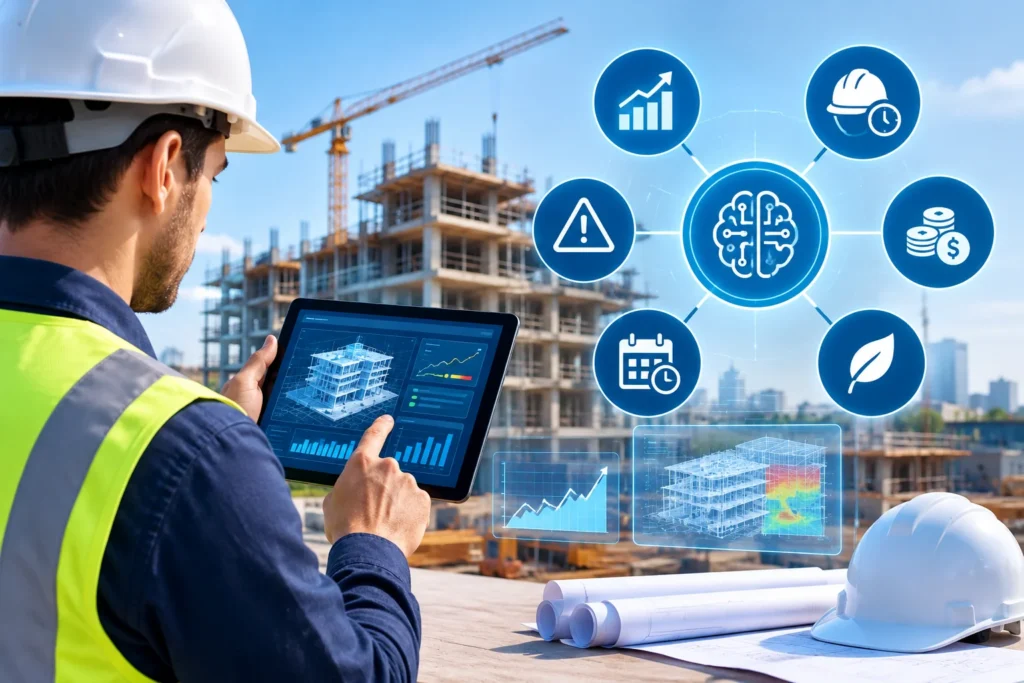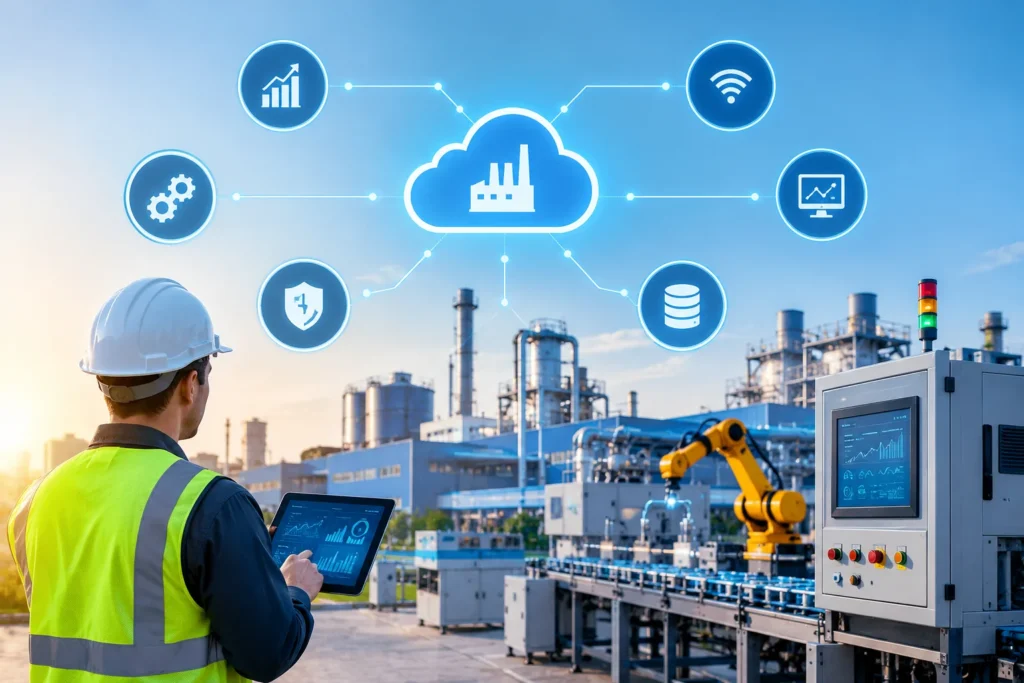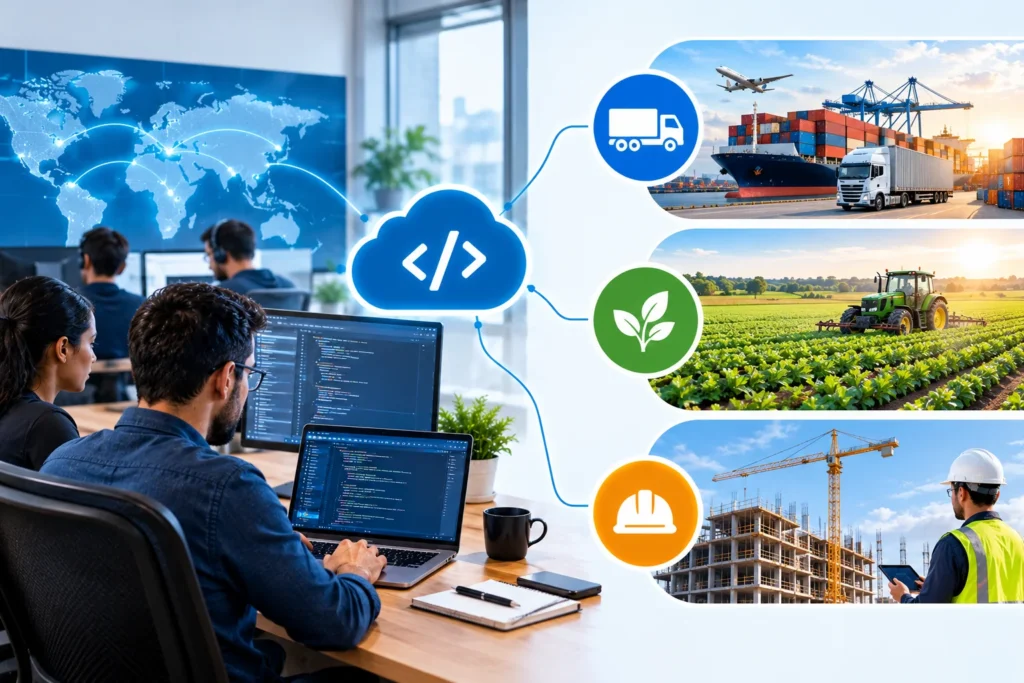
The digital alteration of the heavy industry sector has reached a serious tipping point in 2026. According to a recent Gartner study, more than 70% of enterprises are likely to use industry cloud platforms to speed up their business initiatives by 2027, up from less than 15% in 2023. This shift is even more evident for the engineering and construction (E&C) sector, because firms shift from generic cloud storage toward specialized industrial cloud computing environments. Latest research from Deloitte indicates that “cloud-mature” construction firms are imagining a 16% increase in profit margins by applying real-time data integration to mitigate supply chain volatility and labor shortages. As projects become denser and margins tighter; therefore, the ability to leverage vertical-specific cloud architecture has no longer remained a high-end luxury. Rather, it is now a foundational necessity for project success.
What is Industrial Cloud Computing?
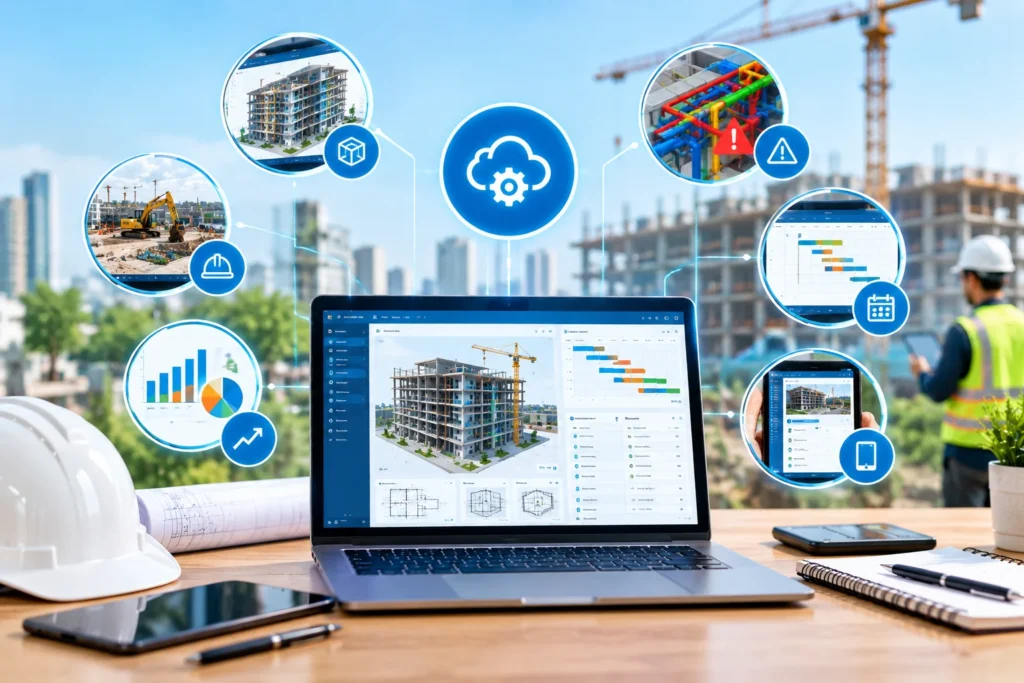
To understand the value proposition for E&C firms, we should identify the technical nuances of industrial cloud computing. Industrial cloud environments are not like general-purpose cloud computing, which provides broad horizontal services (like email or basic file storage). Instead, industrial cloud environments are “vertically integrated” and they are pre-configured with the exclusive data schemas, compliance standards, and API integrations wanted for heavy engineering. This contains native support for enormous 3D BIM models, IoT sensor data from site machinery, and complex “Job Costing” financial structures. By applying industrial cloud solutions, firms can bypass the months of custom coding in general required to make a standard cloud platform “speak the language” of a construction site.
The Rise of Industry Cloud Platforms in E&C
In 2026, industry cloud platforms became the favored delivery model for enterprise software. These platforms merge traditional Platform-as-a-Service (PaaS), Software-as-a-Service (SaaS), and Infrastructure-as-a-Service (IaaS) into a single, consistent offering tailored to an explicit sector. For a construction firm, this means their cloud platform software doesn’t just store files; it realizes the relationship between a structural blueprint, a procurement order, and a site safety inspection. This holistic “Digital Ecosystem” enables uniform data flow between the office and the field, guaranteeing that a change made by a structural engineer is immediately reflected on the tablet of a site supervisor few hundred miles away.
Key Features of Industrial Cloud Solutions and Software
To be effective in an engineering background, industrial cloud solutions should offer high-fidelity features that cater to the “physical” nature of the work.
- Real-Time Data Streaming: Incorporation with on-site IoT sensors to track equipment health and structural stress in real-time.
- Massive Model Handling: The competence to render and manipulate multi-gigabyte 3D models directly in a web browser without local hardware lag.
- Digital Twin Synchronization: Maintaining a “living” digital replica of the physical asset that evolves through the entire construction lifecycle.
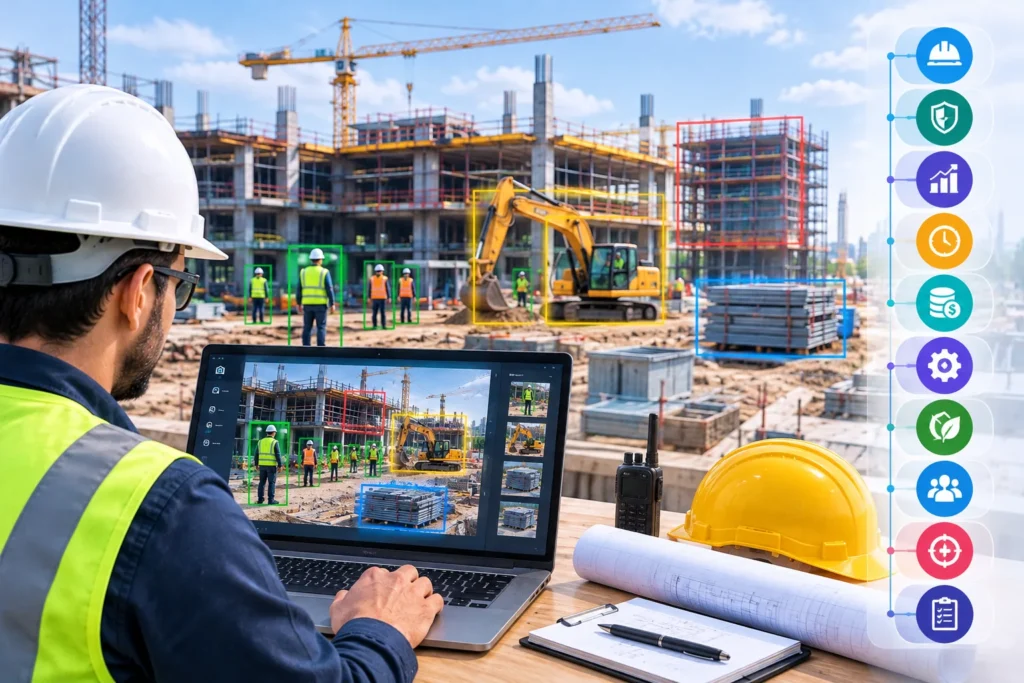
- Automated Compliance Workflows: Pre-built modules for managing OSHA safety logs, environmental permits, and ISO certifications.
- Edge Computing Integration: The competence to process data on-site (at the “edge”) for instant feedback, then sync the results to the central cloud for long-term analysis.
How Cloud Industries Help Optimize Operations
The appearance of specialized cloud industries has deeply changed how project risk is managed. In conventional setups, data was often “trapped” in departmental silos, where accounting used one system, while the engineering team used another. Industrial cloud computing breaks these silos by establishing a Common Data Environment (CDE). This optimization is distinctly visible in “Conflict Resolution”; by running automated clashes finding in the cloud every night, firms can detect pipework and structural beam overlaps weeks before the physical installation starts. This proactive methodology decreases the “Rework Rate,” which industry benchmarks suggest can spend up to 12% of a project’s total budget if left unattended.
Financial Advantages: Reducing Cloud Compute Resource Expenses
One of the most serious challenges for modern CTOs is how to manage the “Cloud Bill.” Engineering tasks, specifically 3D rendering and AI simulations, are extremely resource intensive. Industry leaders are now concentrating on how industry leaders reduce cloud compute resource expenses through an approach known as “FinOps” (Financial Operations). This implies using “Spot Instances” discounted, unused cloud capacity for non-urgent rendering tasks and implementing “Auto-Scaling” to confirm that the firm isn’t paying for high-performance computing power during weekend downtime. By optimizing their cloud platform software to only use the resources they need, firms can decrease their monthly cloud spend by 20% to 30% without surrendering performance.
Benefits of Industrial Cloud: Collaboration, Security, and Scalability
The benefits of industrial cloud computing go deep into the operational DNA of a firm.
Improved Collaboration:
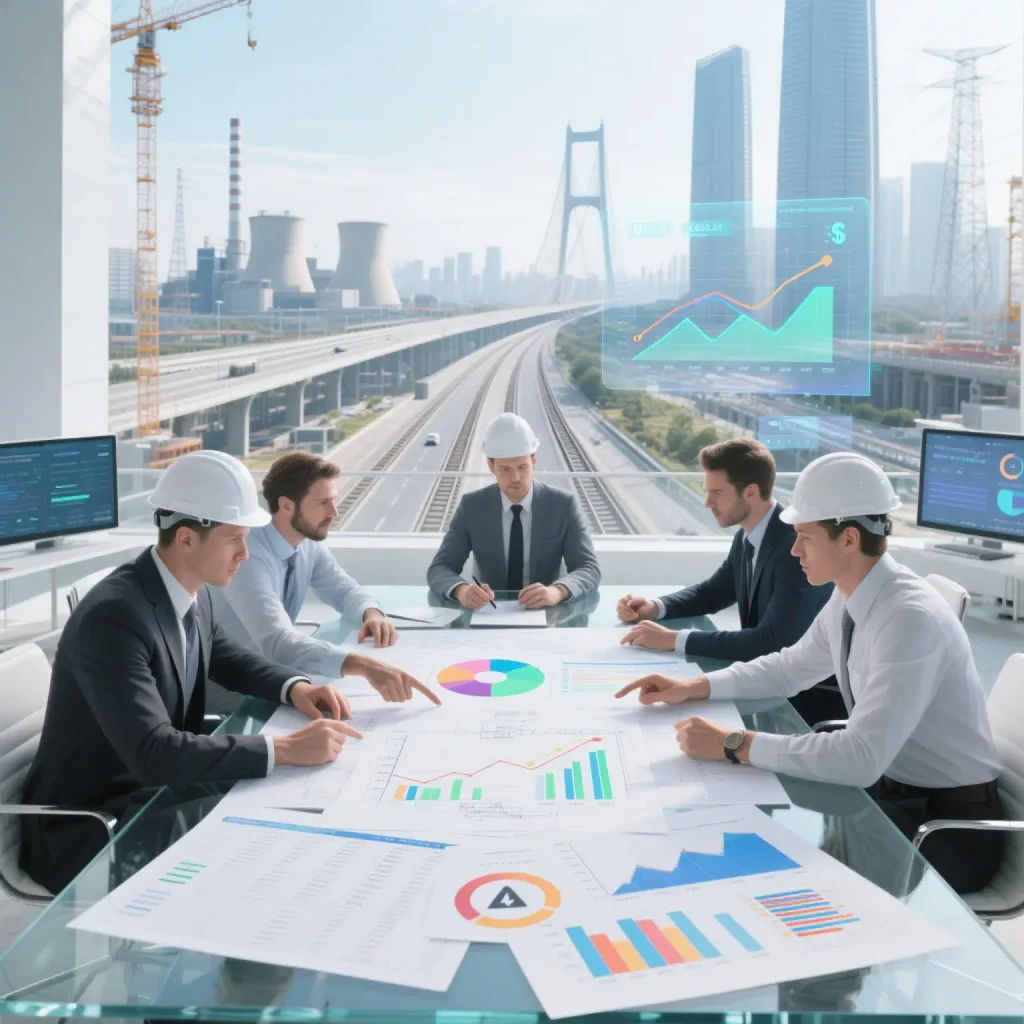
The cloud serves as a digital bridge between stakeholders. Because industrial cloud solutions are built specifically for the sector; therefore, they support “Federated Models,” where different subcontractors can contribute to a single master design all together without overwriting each other’s work.
Enhanced Security:
In 2026, the cybersecurity risk in construction industry is at an all-time elevated. Specialized industrial clouds present “Hardened” security, including end-to-end encryption for sensitive blueprints and Multi-Factor Authentication (MFA) designed for field workers using biometrics.
Global Scalability:
If a firm wins a heavy infrastructure project in a new region, such as a Punjab health infrastructure enhancement, they don’t need to build a local data center. They simply “spin up” a new case of their industrial cloud in the nearest regional zone, providing local teams with low-latency approach to all enterprise tools within minutes.
Challenges and Best Practices for Implementation
Despite the clear ROI, moving to industrial cloud computing involves a systematic approach. The most common challenge is “Data Gravity”, the difficulty of shifting gigantic amounts of legacy data into a new system. Best procedures suggest a “Phased Migration,” where a firm starts by shifting their most “collaboration-heavy” processes, like RFI (Request for Information) management and Submittals before migrating their primary engineering archives. Moreover, firms should invest in “Cloud Literacy” for their site staff, guaranteeing that technology is viewed as a tool to make their jobs easier, instead of an administrative burden.
Future Trends in Industrial Cloud: AI and Sustainability
Looking toward 2027, “Agentic AI” will be the next main feature of industrial cloud computing. We are proceeding toward a world where the cloud doesn’t just store data; it “reasons” with it. For example, an AI agent within the cloud could monitor weather patterns and supply chain delays to suggest automatically a more efficient concrete pouring schedule for the coming week. Also, “Green Cloud” initiatives are becoming compulsory; firms are increasingly selecting industry cloud platforms that deliver transparent “Carbon Footprint” reporting for every compute hour used, helping them meet the ESG (Environmental, Social, and Governance) goals compulsory by modern institutional investors.