This article makes clear the definite roles of standalone simulations and synchronized digital twins across engineering and industrial applications. It makes a comparison and draws contrasts between these methodologies, defines core mechanics, and highlights real-world benefits. This information equips readers who search for keywords such as digital twin vs simulation to select the right strategy, lower operational downtime, optimize system lifecycles, and select suitable development partners without incurring needless costs.
When engineers have to decide how to test designs, monitor assets, forecast failures, or optimize operations; they compare digital twin vs simulation. The approaches are not interchangeable but overlap. A simulation reproduces particular behavior under specified assumptions, while a digital twin links a virtual representation to real-world data and maintains it synchronized at a decided frequency and fidelity. The option depends on whether the question is related to a hypothetical scenario or live asset.
Digital Twin vs Simulation: The Quick Engineering Answer
In a digital twin vs simulation comparison, simulation is a controlled computational experiment. Engineers define geometry, physics, operating conditions, boundary conditions, and inputs, then calculate how a system may behave. A digital twin can contain simulations and integrates operational data, asset identity, history, and real-system updates.
The Digital Twin Consortium defines a twin as an integrated, data-driven representation of real-world entities and processes, synchronized at specified frequency and fidelity. Its 2026 framework organizes implementation around data, context, decision orchestration, and actuation.
For practicing engineers:
• Use simulation to ask, What could happen under these conditions?
• Use a twin to ask, What is happening to this system, what may happen next, and what action should we consider?
• Combine both when operational data must improve prediction and decision-making.
What Is Engineering Simulation?
A common search question is what is engineering simulation. NASA defines simulation as the imitation of the behavioral characteristics of a system, entity, phenomenon, or process. In practice, simulation turns mathematical, physical, logical, or statistical models into repeatable experiments without exposing the real asset.
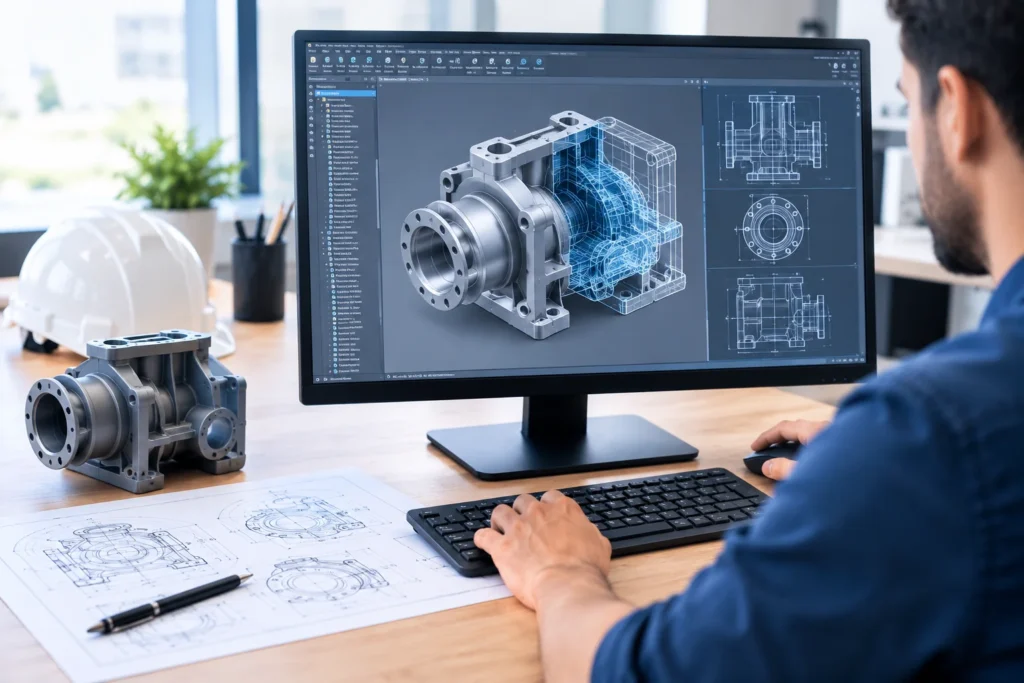
Examples include finite element analysis, computational fluid dynamics, multibody dynamics, discrete-event simulation, and control-system simulation.
Understanding what is engineering simulation clarifies the digital twin vs simulation decision. A simulation does not require a live counterpart and may represent a design that has never been built. A digital twin normally gains value from a persistent relationship with a particular real-world entity or process.
Simulation vs Model: Why the Difference Matters
The phrase simulation vs model describes another important distinction. A model is the representation: equations, geometry, logic, relationships, or data describing the system. A simulation is the execution of that model through time, operating states, loads, scenarios, or uncertainties.
A bridge finite-element model is the structural representation; applying traffic, wind, temperature, or seismic loads and calculating response is simulation. This simulation vs model distinction matters because a digital twin may contain multiple models, each supporting multiple simulations.
Technically, simulation is a process performed with a model; the model itself is not automatically a simulation.
How Digital Twin Modeling and Simulation Work Together
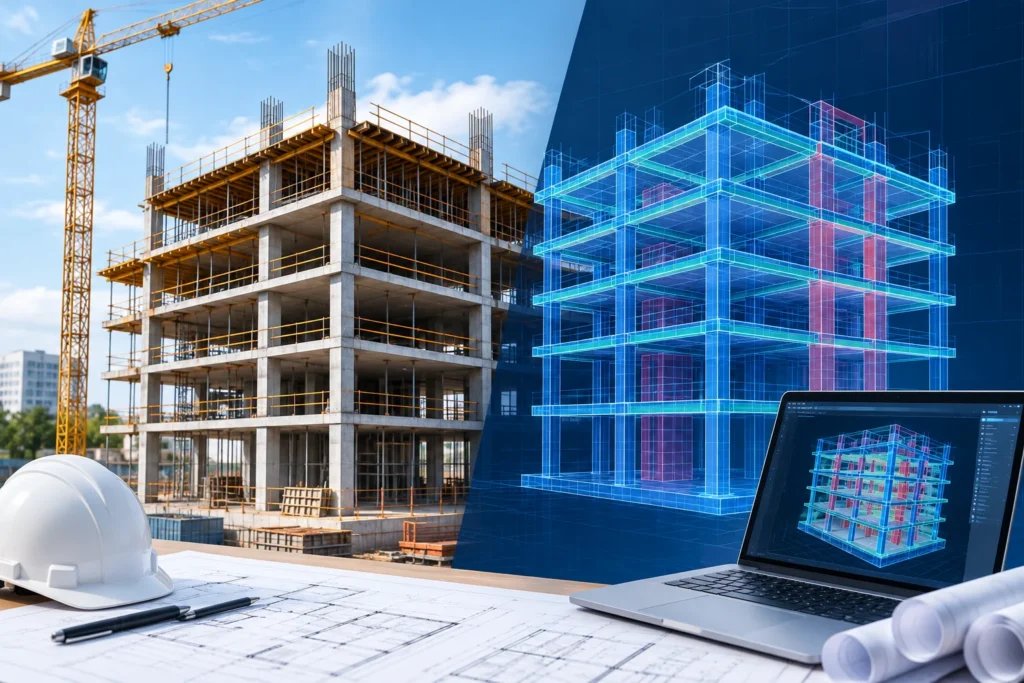
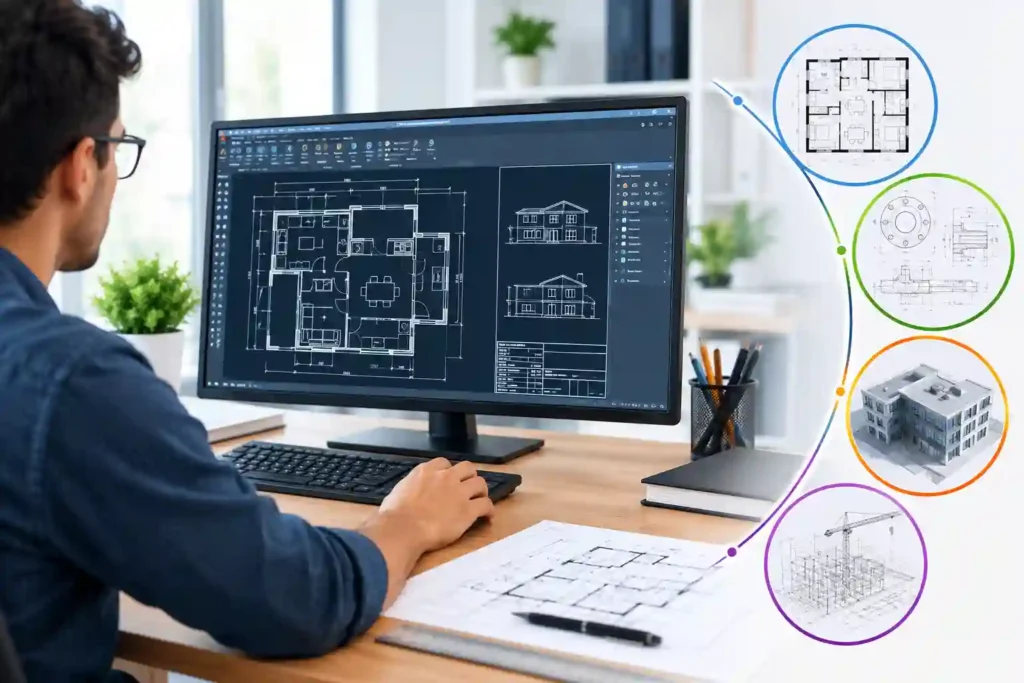
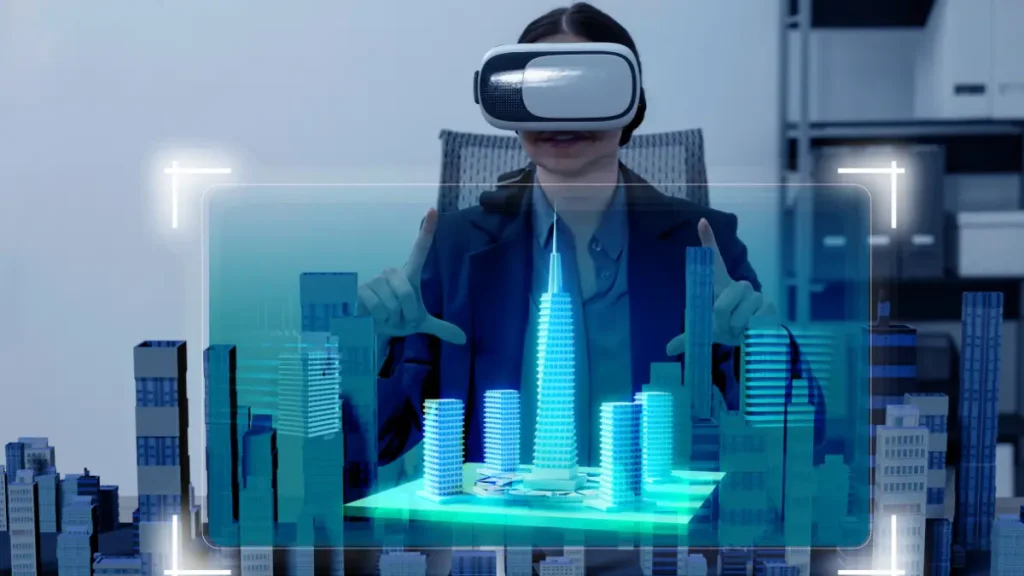
Digital twin modeling and simulation connects engineering representations with contextual and operational information. A twin may combine CAD/BIM geometry, physics models, sensors, maintenance records, control logic, inspections, and analytics.
A mature workflow usually includes:
• Define the operational decision or outcome.
• Identify the real-world entity, boundaries, and required fidelity.
• Build or connect appropriate engineering models.
• Integrate trustworthy historical and live data.
• Calibrate and validate behavior against observations.
• Run predictive or prescriptive simulations.
• Present results to engineers, operators, or automated systems.
• Update models as the asset and operating context change.
This is why a digital twin is not merely 3D visualization with dashboards. Validity, data quality, synchronization, uncertainty, cybersecurity, and configuration control determine whether results are dependable.
Types of Digital Twin Simulations
Common simulation types include:
• Physics-based twins using structural, thermal, fluid, electromagnetic, or multiphysics solvers.
• Data-driven twins using statistical or machine-learning models.
• Hybrid twins combining first-principles physics with data-driven corrections or surrogate models.
• Process twins representing production, logistics, utilities, traffic, or dynamic workflows.
• System-of-systems twins connecting multiple assets and subsystems.
• Scenario twins for capacity planning, resilience testing, and emergency response.
The best architecture is use-case driven. Higher fidelity is not automatically better; unnecessary detail increases computational cost, integration complexity, and validation effort.
Digital Twin vs Virtual Twin: Are They the Same?
The query digital twin vs virtual twin is complicated because terminology varies by vendor and industry. The Digital Twin Consortium lists virtual twin as an alternate, non-preferred term for digital twin. Dassault Systèmes uses virtual twin for a broader experience integrating 3D modeling, simulation, lifecycle information, and real-world feedback.
Therefore, engineers comparing digital twin vs virtual twin should evaluate capabilities rather than labels. Check synchronized data, simulation depth, configuration history, traceability, prediction, optimization, and closed-loop action.
In procurement documents, define required functions explicitly so naming does not hide differences in architecture, interoperability, and lifecycle coverage.
Digital Twin vs Simulation: Benefits and Limitations
The business case strengthens when models connect to operational reality. NIST reports that downtime may consume 8.3% to 13.3% of planned production time and contribute about $245 billion in losses for U.S. discrete manufacturing. That scale explains interest in forecasting, condition monitoring, and optimization.
McKinsey reports that some product-twin users cut development time 20% to 50%, reduced prototypes from two or three to one, and had 25% fewer quality issues at production entry.
Advantages
• Continuous visibility into condition and performance.
• Forecasting using current and historical operating data.
• Safer testing before physical intervention.
• Faster root-cause and scenario analysis.
• Predictive maintenance and lifecycle optimization.
• Reuse of simulation models beyond design.
Limitations
• Integration effort across engineering, IT, and operational technology.
• Dependence on sensor quality, metadata, calibration, and governance.
• Validation challenges as models and conditions change.
• Cybersecurity and access-control requirements.
• Cost that may exceed value for simple assets.
In a digital twin vs simulation assessment, simulation is often faster and cheaper for isolated design questions. A twin is more compelling when an asset requires repeated monitoring, prediction, optimization, or operational decisions.
Industry Uses
Digital twins support infrastructure, manufacturing, energy, buildings, transportation, water, aerospace, and industrial facilities. An infrastructure twin may combine BIM, monitoring, inspections, weather, and deterioration models. Manufacturing twins connect machines, production states, quality records, and process simulations. Energy twins evaluate condition, loads, thermal behavior, and maintenance scenarios.
Here, simulation vs model remains important: geometry or an information model provides context, while simulation estimates behavior. The digital twin vs simulation distinction becomes especially valuable after commissioning, when live data reveals how the real asset differs from design assumptions.
For digital twin vs simulation selection, ask: Which decisions require synchronized information that a standalone simulation cannot provide?
Choosing a Digital Twin Development Company
IM Engineering Services (IMES) provides support in offshore digital-twin engineering, model integration, simulation coordination, and BIM/CAD preparation. IMES can provide specified work packages or extended support for multiple disciplines.
Choosing a digital twin development company should initiate with engineering outcomes, rather than platform demonstrations. A competent provider should recognize domain physics, model validation, data architecture, interoperability, cybersecurity, asset information, and lifecycle governance.
Inquire about calibration, sensor mapping, ambiguity, version control, APIs, acceptance criteria, and model/data ownership, while evaluating a digital twin development company.
A strong provider should also be able to explain when a simpler simulation, dashboard, BIM model, or analytics solution is adequate. Overselling a twin establishes excessive cost and technical debt.