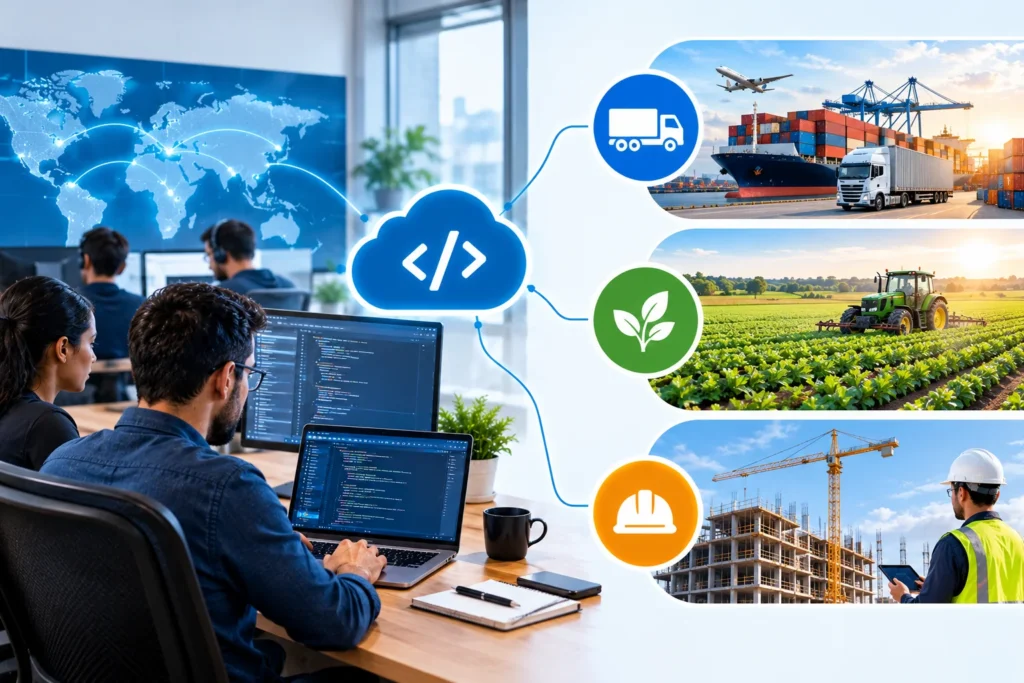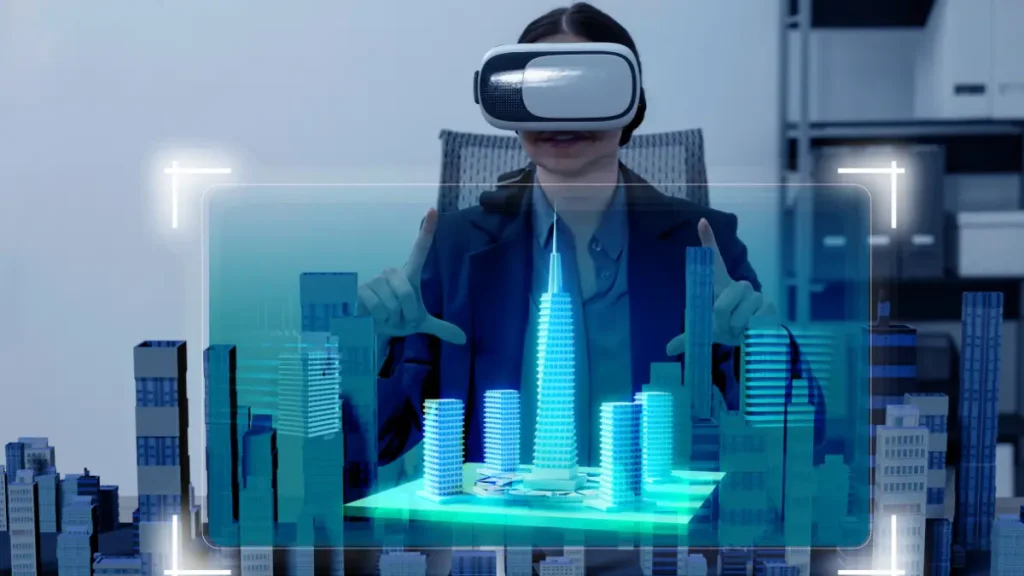
In the present competitive environment, the construction has to build quicker, control costs better, and operate assets more efficiently over their entire life cycle. That pressure is real, because buildings operations and construction together are responsible for more than one-third of global energy-related emissions, while construction productivity has historically lagged behind other major sectors. In that background, the question “what is digital twin in construction” is no longer just a question for technical discussion only. It is a business question knowing how owners, designers, contractors, and facility teams can use live data for better decisions.
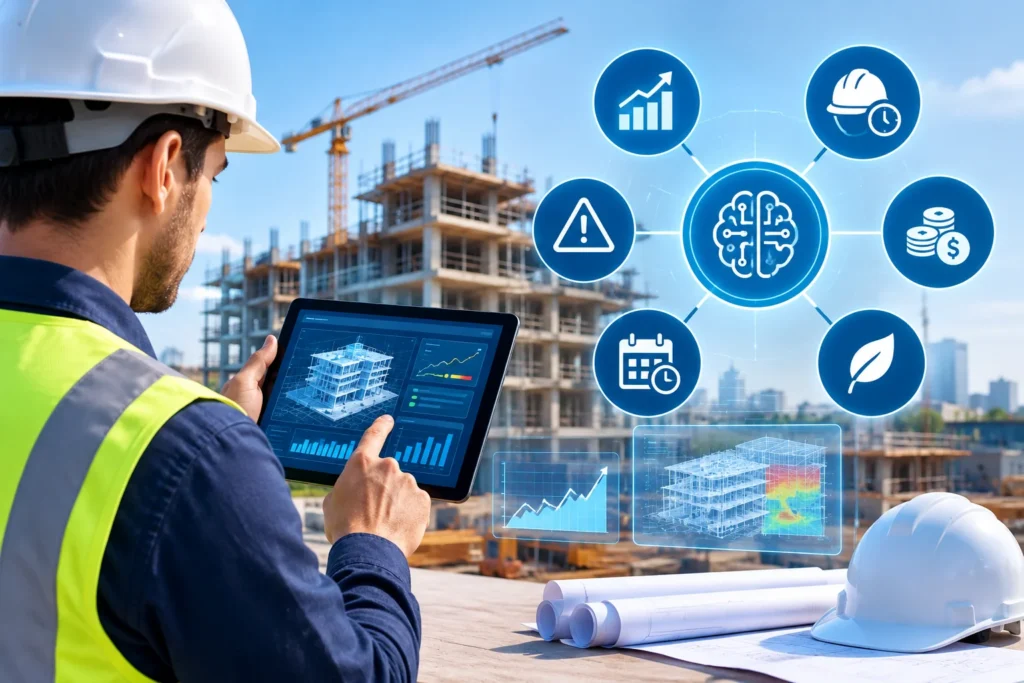
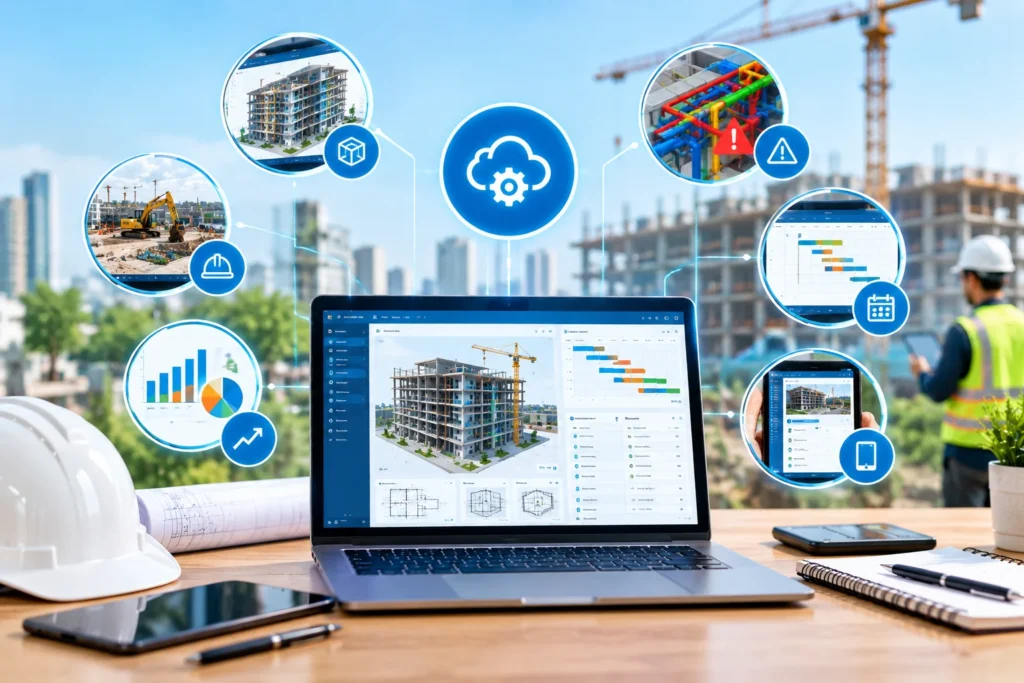
In simple words, a digital twin in construction is a living digital illustration of a physical asset, system, or building that stays linked to real-world conditions through data. Unlike a static model, it can be modernized with sensor inputs, operational data, and simulation outputs so that teams can monitor performance, test scenarios, and improve outcomes during design, construction, and operations. NIST defines a digital twin as a type of computerized model of a physical system with the potential for high accuracy, precision, and flexibility, while Autodesk explains that in AEC it combines the digital representation of a built asset with real-time data over the project lifecycle.
What is Digital Twin in Construction?
To answer the question “what is digital twin in construction”; consider it as the next step after drawings, BIM models, and asset registers. A drawing demonstrates intent. A BIM model systematizes design information. A digital twin goes further by linking that model to real performance, behavior, and context. That means the twin can imitate what is happening on site or inside the finished facility, not just what was planned on paper.
This is the reason that digital twin technology in construction matters so much. It supports project teams switch from reactive decisions to predictive decisions. Instead of waiting for defects, delays, abnormal energy use, or equipment failure, teams can notice signals early, simulate choices, and act before the problem grows. That is the practical worth behind the concept.
What Are Digital Twins, and How Are They Different from BIM?
Many readers have questions in their minds like, what are digital twins, and whether they are just another name for BIM. One way answering those questions is that they are related, but they are not the same thing. BIM is a organized digital representation of the physical and functional features of an asset, frequently strongest in design and coordination. A digital twin may use BIM as a foundation, but it adds live or frequently refreshed data, operational logic, analytics, and feedback loops. Building SMART defines a digital twin as a digital picture of a physical asset where the physical and digital forms exchange data through the entire lifecycle, and it observes that a digital twin can be realized as a “living” extension of BIM processes.
So, when someone asks, “what is digital twin in construction”, the clearest answer is this: BIM supports you model what should be built, while a digital twin supports you comprehend how the built asset is actually behaving. BIM is typically design-centered. A digital twin, on the other hand, is lifecycle centered. BIM supports coordination, while a digital twin supports monitoring, simulation, optimization, and long-term operations in addition to coordination.
The Evolution of Digital Twin Technology in Construction
The idea behind digital twins did not start in construction. NASA’s work on “living models” and later digital twin thinking facilitated for shaping the concept of virtual representations that track real systems over time. Over the years, the idea extended into manufacturing, infrastructure, smart cities, and the built environment. Today, digital twin engineering for construction is evolving more practically because the availability of cloud computing, IoT devices, BIM maturity, AI models, and linked platforms is more than it was a decade ago.
Construction has switched to digital twins slower than sectors like aerospace, but the direction is now clear. A 2022 review of digital twins for constructed facilities recognized application areas that include lifecycle analysis, facility management, energy, structural health monitoring, infrastructure management, and city-scale use cases. That is important because it shows that technology is no longer just a concept for futuristic buildings. It is already being studied and applied across real built assets.
How Does Digital Twin Technology Work in Construction?
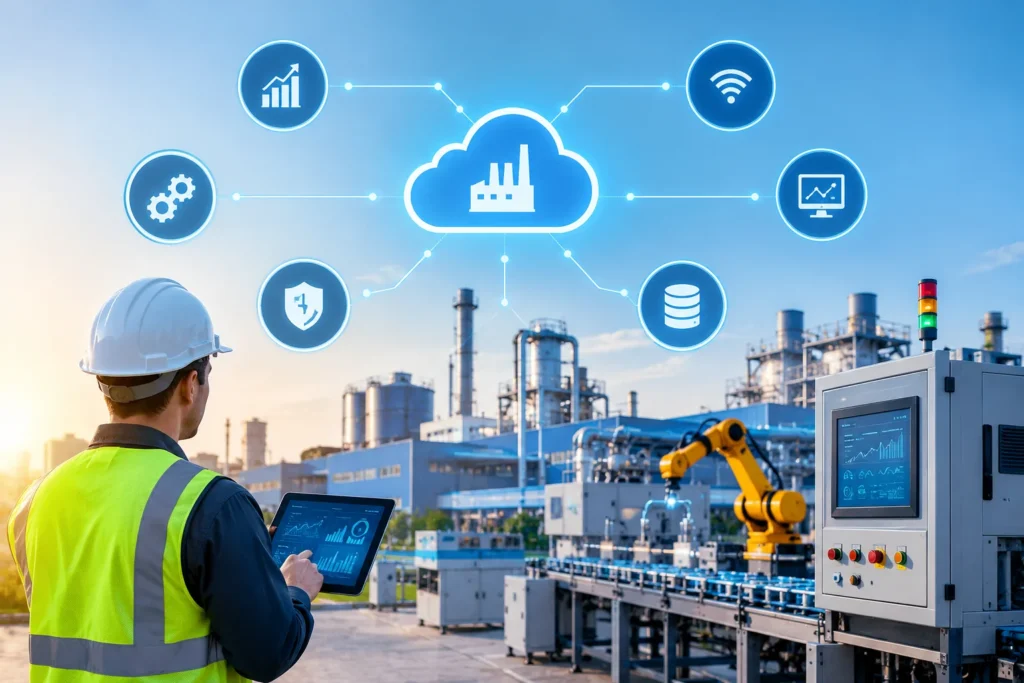
A common question that comes in mind is “how does digital twin technology work” in day-to-day construction and smart building delivery. At its core, the procedure links a physical asset to a digital environment where data can be visualized, analyzed, and used for decisions. Microsoft’s Azure Digital Twins defines this as generating comprehensive digital models of environments, using an open modeling language and a live execution environment that keeps the twin current with linked data sources.
A characteristic construction digital twin workflow seems like this:
- The team starts with a design model, frequently from BIM, CAD, GIS, or engineering databases.
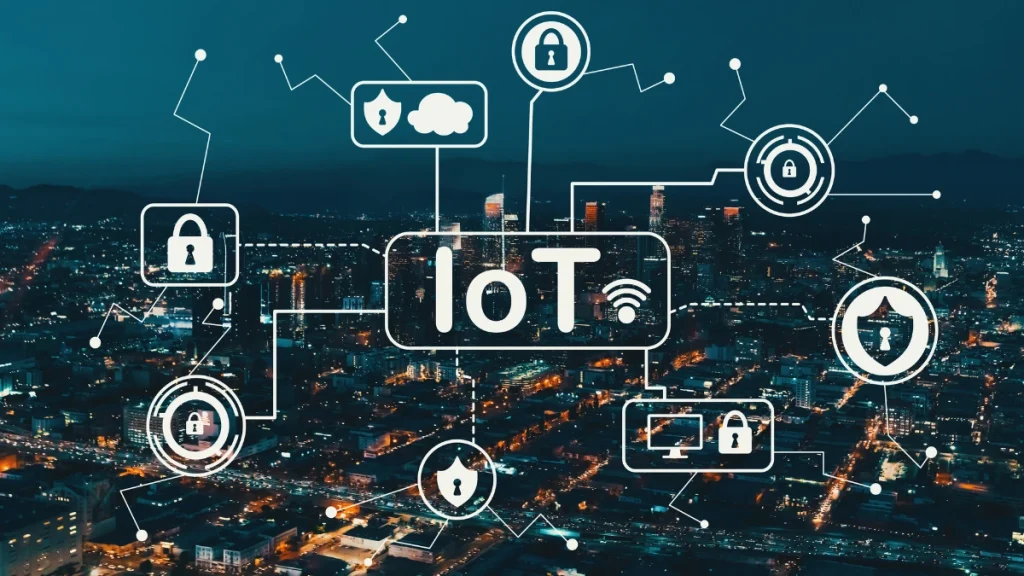
- Instruments like IoT sensors, meters, scanners, cameras, or equipment telemetry are installed at the physical asset or site.
- Data moves into a cloud or platform layer where the asset model is updated.
- Analytics, simulation, and sometimes AI are applied to distinguish issues, compare expected versus actual behavior, and test future scenarios.
- The results are shown in dashboards, 3D views, alerts, or decision-support tools both for project and operations teams.
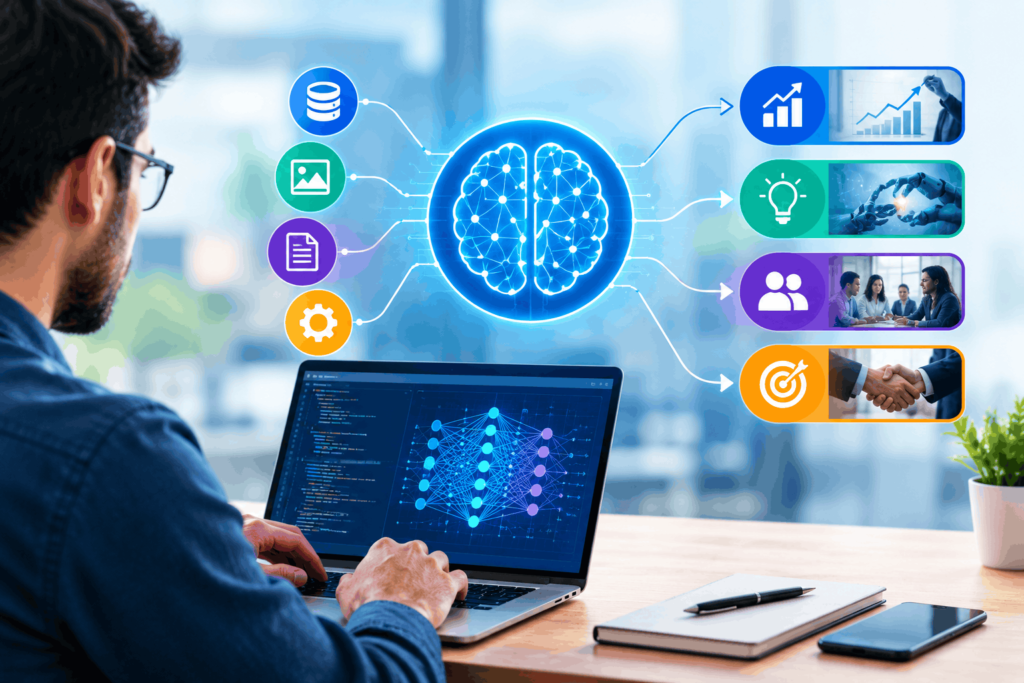
This is why digital twin technology in construction is often defined as a bridge between the physical world and the data world. IoT provides live signals, BIM provides geometry & asset context, and AI supports classify patterns, predict problems, or optimize performance. Working together, they make the model that remains useful after design handover.
What is Digital Twin architecture?
Another important question is “what is digital twin architecture”. In construction terms, it is the structure that enables the twin to function dependably across design, delivery, and operations. It typically includes a data layer, a model layer, a connectivity layer, an analytics layer, and a user layer.
The data layer collects information from BIM files, schedules, asset tags, sensors, maintenance logs, energy meters, and sometimes ERP or cost systems. The model layer systematizes those inputs into an intelligible representation of the building, site, or infrastructure asset. The connectivity layer retains digital and physical conditions aligned. The analytics layer runs rules, simulations, and predictions. The user layer provides outputs in dashboards, 3D scenes, warnings, and scenario-testing tools.
This architecture is important because a weak twin is typically not a modeling problem. It is a data incorporation problem. The digital twin becomes a pretty interface rather than a decision engine if systems cannot communicate with each other, if sensors are poor, or if naming conventions are inconsistent. That is the reason that standards, interoperability, and governance matter so much in digital twin engineering for construction.
Digital Twin Engineering for Construction in Real Projects
Digital twin engineering for construction generates value across the entire asset lifecycle, not only after handover. During design, it supports teams test options for energy use, system layout, occupancy behavior, or resilience. During construction, it can help progress tracking, quality checks, logistics, safety review, and delay analysis. During operations, it works as a smarter platform for maintenance, energy management, and asset optimization.
Smart Building Design
In smart building design, the twin can combine space data, MEP systems, environmental data, and likely use patterns. That enables owners and designers to simulate how the building may perform before expensive changes are locked in. It is particularly useful for HVAC performance, occupancy-based control plans, indoor environmental quality, and lifecycle planning. Autodesk records that digital twins support design optimization and operational efficiency, while NIST’s smart buildings blueprint shows their use for simulation and “what-if” analysis.
Construction Monitoring
On the job site, the twin can progress visibility. It can join design intent with live status updates from field tools, scanners, drones, and sensor systems. A recent case study on office-building construction described information pipelines that tracked different aspects of the construction procedure and used the collective result to support management decisions through a larger digital twin environment. That makes the twin beneficial for schedule confidence, rework control, and site coordination.
Infrastructure and Asset Management
For infrastructure, the value is frequently even higher because the asset lives for many years. Digital twins can provide support for inspection planning, structural health monitoring, maintenance prioritization, and resilience decisions. The Digital Twin Consortium observes that AECO applications generate value across global infrastructure, while infrastructure-focused guidance stresses productivity, quality, and efficiency gains when digital twins are aligned with lifecycle processes instead of treated as add-ons.
Benefits of Digital Twin Technology in Construction
The strongest reason for adopting digital twin technology in construction is not that it looks progressive. Real reason is that it can improve decisions that affect money, time, and long-term functioning. Autodesk, citing estimations from Stanford’s Center for Integrated Facility Engineering, links digital-twin-enabled workflows with decreased non-budgeted change orders, lower lifecycle operational costs, quicker project delivery, and higher building occupancy results. Even when individual project results vary, the direction is clear i.e. a linked digital environment can decrease waste and improve asset value.
The benefits usually can be divided into a few major groups:
- Better visibility into condition of asset and project status
- Earlier discovery of errors, clashes, and performance drift
- Stronger cost optimization and control on budget
- More dependable maintenance planning and reduced downtime
- Enhanced energy and sustainability performance
- Improved owner decisions across the asset lifecycle
From a financial point of view, the most persuasive angle is return on information, not only return on software. A digital twin can improve ROI by reducing rework, avoiding needless maintenance, optimizing energy use, and giving owners a stronger basis for capital planning. NIST’s economics work on digital twins stresses the importance of evaluating both acceptance costs and quantifiable benefits when deciding whether investment makes sense.
Challenges and Limitations
Even the best answer to “what is digital twin in construction” should be honest about the barriers. The first encounter is cost. A serious twin wants sensors, incorporation work, data cleaning, platform setup, and governance. The second encounter is interoperability. Construction data is often disjointed across many tools, vendors, and teams. The third encounter is skills. Many firms still keep BIM teams, FM teams, and IT teams working discretely, which slows acceptance.
Security and trust are also major apprehensions. NIST has precisely highlighted security and trust considerations for digital twin technology, which matters because a twin may combine operational technology, IoT feeds, engineering data, and facility information in one environment. That generates value, but it also raises cybersecurity, privacy, and governance risks if not handled cautiously.
There is also a practical encounter in scope. Some organizations attempt to build a flawless enterprise-wide twin too early. In many cases, a better approach is to start with a focused use case such as energy optimization, equipment monitoring, commissioning, structural monitoring, verify value, and then scale. That staged approach is more realistic for budget control and change management. This is particularly relevant when firms ask how does digital twin technology work in commercial practice instead of theory.
Real-World Examples of Digital Twin Engineering for Construction
Real projects display how the idea is being applied. Samsung C&T has offered a digital twin for a 100,000-square-meter office building that uses BIM and AI-based analytics for energy, asset, and space management. That kind of application shows how smart building design can extend into real operations instead of ending at handover.
At the city and infrastructure scale, the World Economic Forum has emphasized how Hong Kong uses IoT and digital twin technologies for real-time monitoring and management of urban construction projects. WEF has also discussed projects like NEOM using XR, IoT, and digital twins to advance safety, logistics, and construction quality. These examples depict that digital twin technology in construction is progressing from building-level use into district and city systems.
The Future of Digital Twins in Construction
The future of digital twin engineering for construction will probably be shaped by tighter incorporation with AI, better interoperability, and stronger owner request for lifecycle data. McKinsey has observed that digital twins and generative AI can strengthen one another, with AI helping streamline deployment and digital twins helping validate AI output in real operating environments. That is important because the next stage will not only be visualization; it will be smarter decision support.
This means that the answer to “what is digital twin architecture” will also become more advanced over time. In future, architecture would like to include semantic data models, real-time spatial intelligence, scenario engines, and automated controls that connect design, construction, and operations into one digital thread. Recent work on spatially intelligent digital twins by the Digital Twin Consortium’s points in that direction.
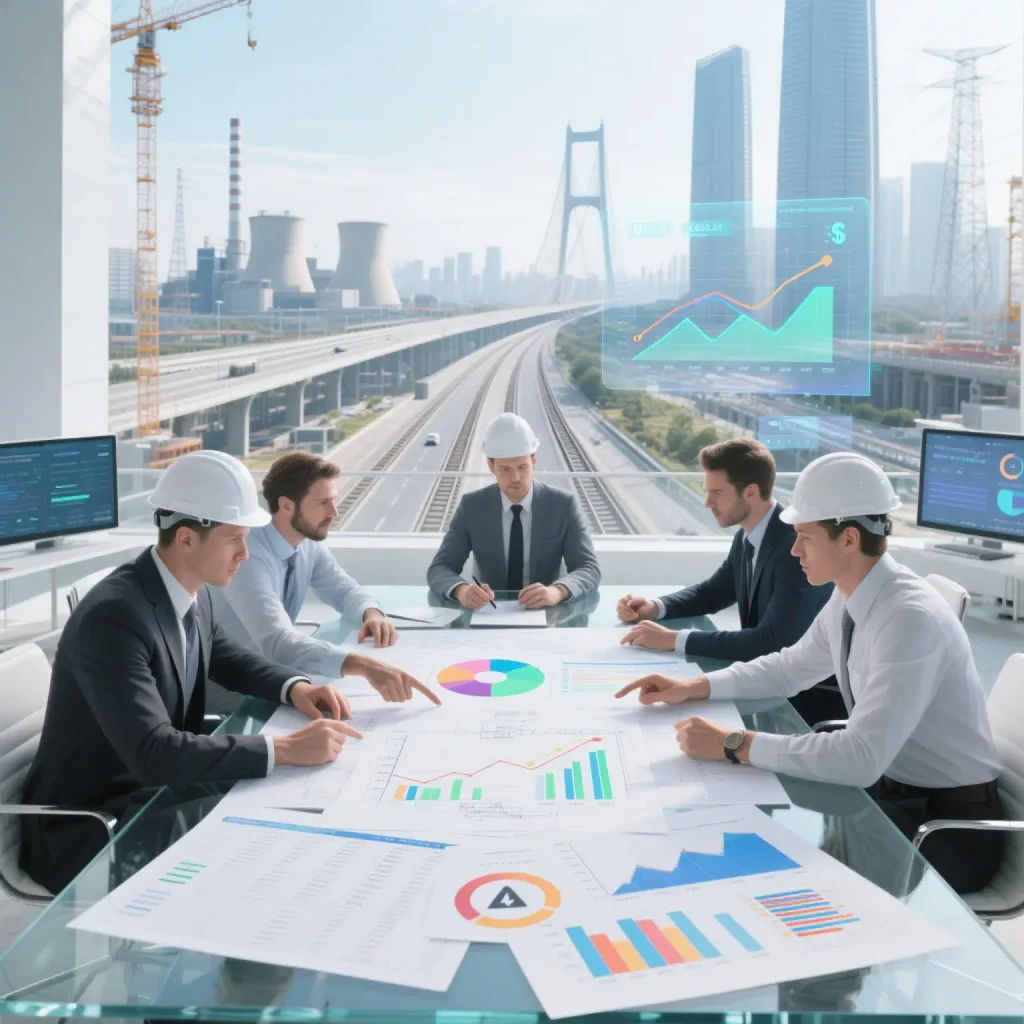
The message for firms, owners, and developers, is simple. Digital twins are most valuable when they are linked to real business outcomes i.e. cost control, resilience, sustainability, operational efficiency, and better asset decisions. That is the reason the topic matters now, particularly in smart buildings, infrastructure, and performance-led construction delivery.
Conclusion
So, what is digital twin in construction? It is a dynamic digital picture of a built asset that stays connected to the real world through data, analytics, and lifecycle intelligence. It is more than BIM, more than visualization, and more than a dashboard. If done well, it becomes a decision platform for design teams, contractors, owners, and facility managers. As digital delivery matures, digital twin technology in construction will become progressively important for smart building design, infrastructure performance, and budget control. For readers of Infratech Hub, this is one of the clearest signals of where construction technology is heading: toward linked assets, live intelligence, and better outcomes across the entire lifecycle.