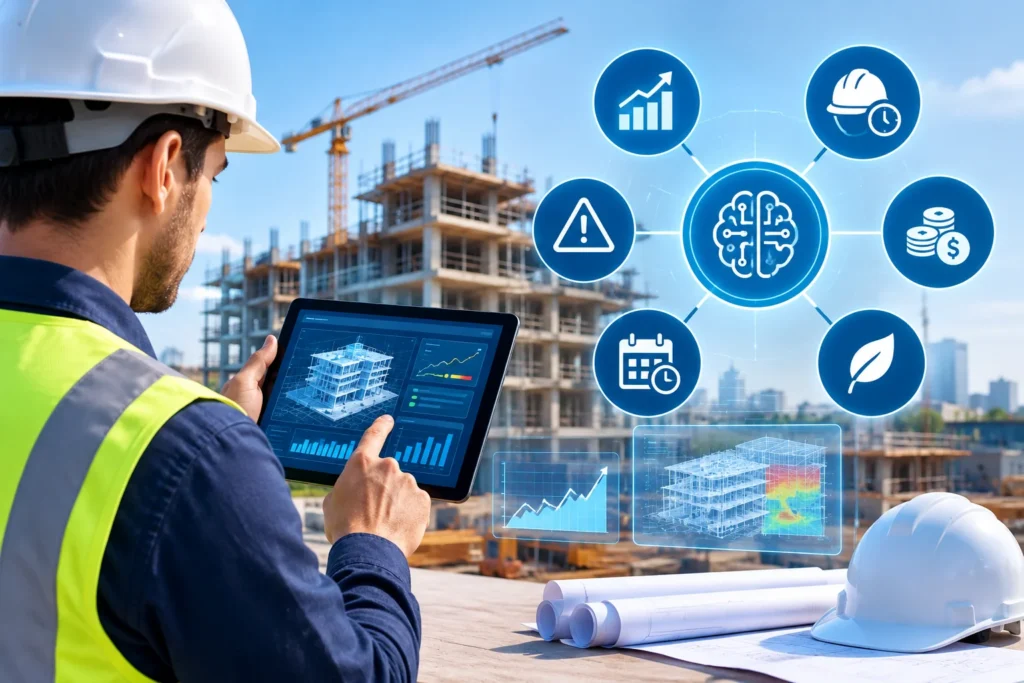
The global landscape for sensors in construction is experiencing a seismic shift, which is driven by the urgent requirement for operational transparency and safety. According to 2026 market research, the global IoT in construction market has reached an estimated valuation of $17.89 billion, with hardware, precisely the deployment of over 42 million connected devices accounting for almost half of that growth. This surge is not just a trend but a fundamental evolution; as of early 2026, approximately 39% of major global projects have amalgamated AI-powered IoT platforms to manage predictive analytics. This data-driven foundation enables contractors to shift from reactive troubleshooting to proactive site administration, fundamentally modifying the conventional building lifecycle.
Deep Dive into Sensor Technology for Smart Devices
To realize the impact of these tools, one should first reveal the sensor technology for smart devices that give power to the modern job site. At the center of this revolution are MEMS (Micro-Electro-Mechanical Systems), which are tiny, incorporated devices that combine mechanical and electrical components to evaluate physical phenomena like vibration or tilt. In the construction context, these are classified into active and passive building sensors. Active sensors expect a dedicated power source and emit energy (like ultrasound or radar) to notice changes, while passive sensors simply identify existing energy from the environment, such as heat or light.
In 2026, the communication pillar for these devices shifted toward Low Power Wide Area Networks (LPWAN) and 5G. These protocols enable sensors to transmit small packets of data over long distances without draining their batteries, guaranteeing that even the most remote corners of a high-rise project remain “visible” to the project manager’s dashboard. This connectivity is the “nervous system” of the site, changing individual hardware pieces into combined intelligence.
Types of Building Sensors and Their Technical Roles
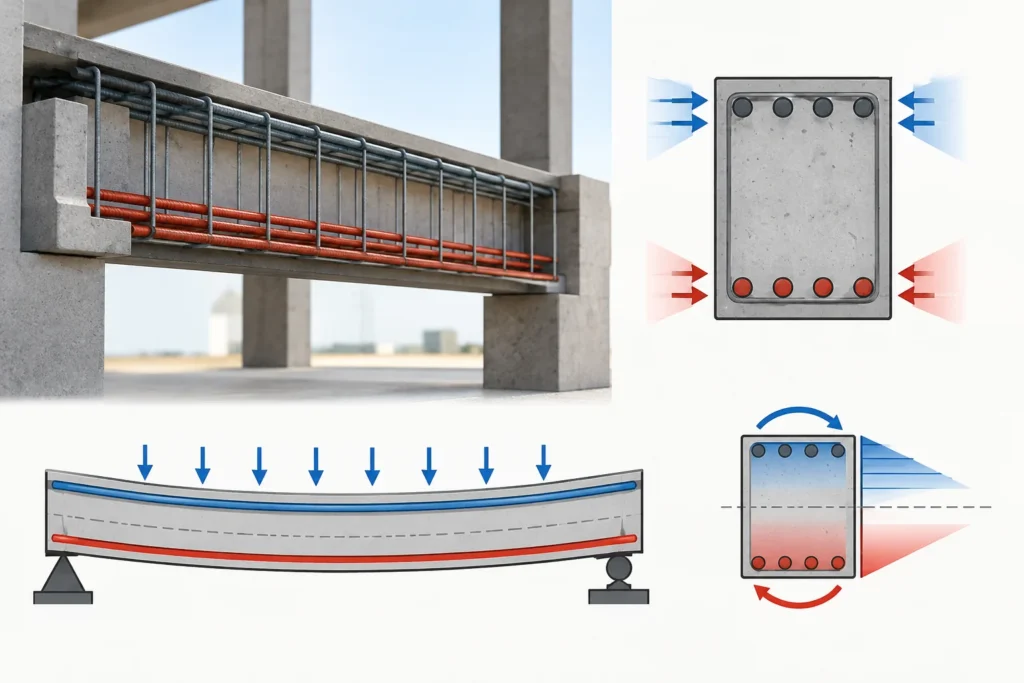
Modern projects rely on a diverse arrangement of building sensors to monitor every phase of development. Structural health sensors, such as strain gauges and accelerometers, are inserted into the very bones of a building to identify infinitesimal shifts in load or seismic response. In the meantime, environmental sensors monitor ambient conditions like humidity, CO2 levels, and VOCs (Volatile Organic Compounds), guaranteeing that the site continues compliant with increasingly strict ESG and health regulations.
One of the most technically advanced applications includes concrete maturity monitoring. By using inserted thermal sensors and applying the Arrhenius Equation, engineers can estimate the “equivalent age” of concrete. This empowers them to know exactly when a slab has reached its needed compressive strength, often shaving days off a schedule by removing the need to wait for traditional, and often incorrect, lab-cured cylinder tests.
The Strategic Role of the Internet of Things in the Construction Industry
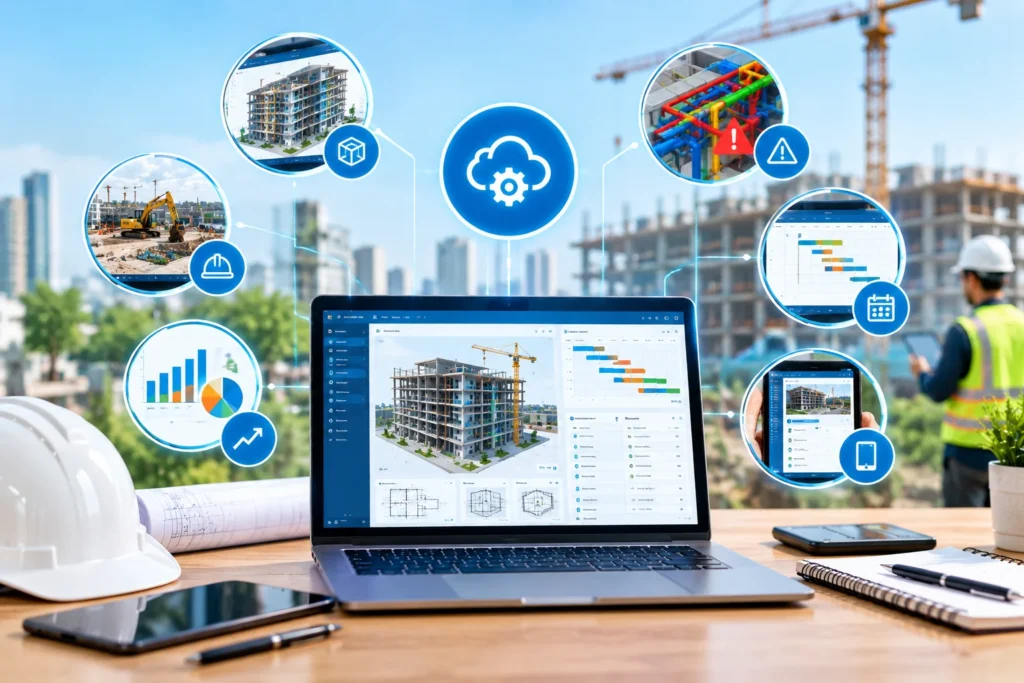
The incorporation of the internet of things in construction industry frameworks do more than simple data collection into the realm of “Sensor Fusion.” This procedure involves linking data from multiple sources like GPS trackers on excavators, wearables on workers, and moisture sensors in materials to initiate a unified Digital Twin of the project. This digital replica updates in real-time, enabling stakeholders to simulate the effect of weather delays or supply chain blocks before they happen.
By 2026, the internet of things in construction industry has also developed as a prerequisite for acquiring favorable insurance premiums. Insurers now offer substantial discounts to firms that use IoT-monitored sites, as the real-time data substantially decreases the risk of fire, water damage, and structural failure during the high-risk construction phase.
Financial Impacts: ROI and Long-Term Profitability
The financial line of reasoning for sensors in construction is anchored in significant ROI. Research from 2025 indicates that firms assuming IoT telematics for fleet management did an average fuel saving of 18%, equivalent to 2,000 liters of fuel per heavy machine yearly. Predictive maintenance alone has been shown to decrease unplanned downtime by 28%, saving large-scale firms upwards of $700,000 annually across their equipment fleets.
Likewise, IoT sensors in construction directly stop the industry’s historical struggle with material waste. By automating inventory, tracking and monitoring the storing conditions of sensitive materials like adhesives or sealants, contractors can decrease material waste by over 13%. These small percentages aggregate into great gains in long-term profitability, chiefly as project margins remain tight due to global inflationary pressures.
Implementation, Benefits, and Challenges
While the transition to a smart site offers enormous rewards, it involves a structured approach to overcome initial barriers. Below are some basic considerations for firms that are planning to add this technology:
Steps to Implement IoT Sensors:
- Needs Assessment: Find high-impact areas like safety, equipment downtime, or material waste.
- Sensor Selection: Select ruggedized, industrial-grade sensors (IP67 or higher) capable of withstanding dust and vibration.
- Network Deployment: Set up a consistent LPWAN or 5G gateway to guarantee site-wide coverage.
- Data Integration: Feed sensor outputs into a centralized BIM or ERP system for actionable visions.
Pros of IoT Sensors in Construction:
- Enhanced Safety: Wearables can decrease site accidents by up to 23% through fall detection and biometric monitoring.
- Schedule Certainty: Real-time progress tracking decreases project delays by an average of 21%.
- Quality Assurance: Continuous monitoring guarantees structures meet design standards, reducing expensive rework.
- Sustainability: Real-time energy and water monitoring assist projects meet carbon-neutral mandates.
Cons and Challenges:
- Initial Capex: The high upfront cost of hardware and software incorporation can be a barrier for mid-tier firms.
- Cybersecurity: A wider “attack surface” augments the risk of data breaches on temporary job site networks.
- Skill Gaps: There is currently a shortage of site personnel who are trained in IoT data analytics and system maintenance.
- Data Overload: Without proper AI filtering, the complete volume of data can overwhelm project managers.
Key Applications of IoT Sensors in Construction
The practical applications of IoT sensors in construction are extensive, touching every department from safety to logistics:
- Asset Tracking: GPS and RFID tags reduce the “lost tool” problem and inhibit unauthorized equipment use.
- Worker Safety: Smart helmets and vests monitor heart rates and heat stress, alerting supervisors for medical emergencies.
- Environmental Compliance: Sensors automatically log noise and dust levels, giving an audit trail for local regulators.
- Digital Twin Synchronization: Sensors provide the “as-built” data required to keep digital models precise throughout the build.
Future Trends and 2026 Innovations
As we move through 2026, the focus of sensors in construction is moving toward Edge AI. This technology enables sensors to process data locally instead of sending everything to the cloud, that enables immediate alerts for critical events such as structural collapses or gas leaks. We are also observing the rise of “self-healing” infrastructure, where embedded sensors activate autonomous repair systems when micro-cracks are identified.