Rework silently destroys margins. One widely quoted industry report estimated that U.S. construction expenditure in 2018 could see about $65B spent on rework (based on rework at ~5% of total costs). Much of that rework is connected to poor project data and miscommunication.
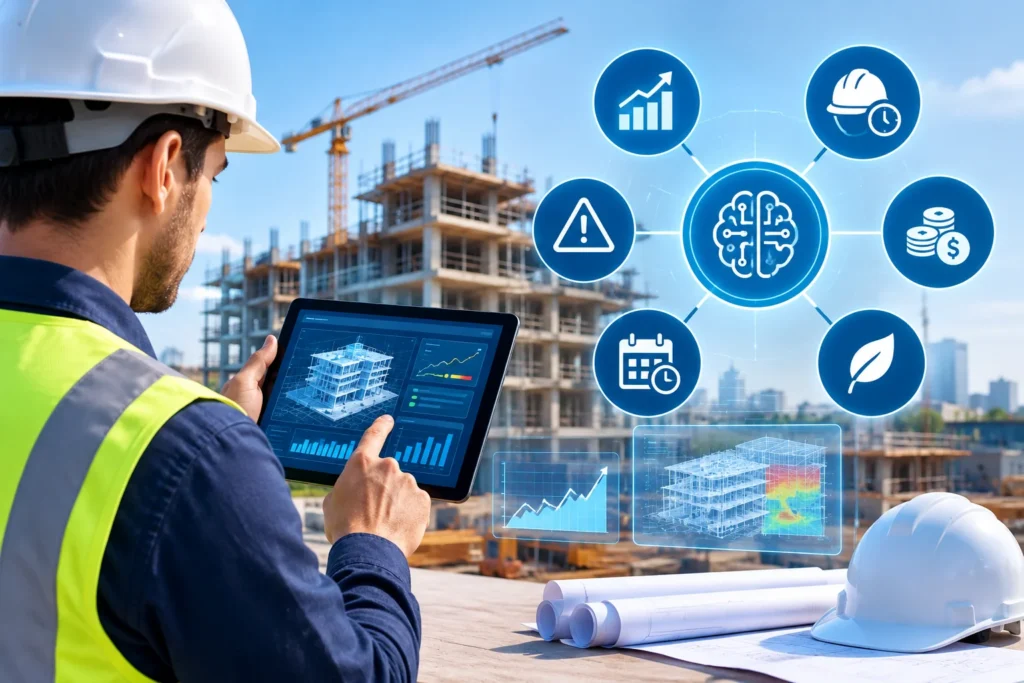
That’s why 3D modelling in construction is now a practical cost-control tool, as it shows conflicts before site work, tightens quantities, and decreases late changes.
What It Means
In simple terms, 3D modelling in construction makes a digital representation of the building or infrastructure so that teams can coordinate, verify, and plan work before they build it. A construction 3D model can range from basic geometry to data-rich objects, and it can provide support to BIM workflows without forcing “BIM everywhere.”
Key terms: clash recognition, constructability, LOD, parametric objects, coordination model, and quantity takeoff.
Where It Adds the Most Value
The highest ROI for 3D modelling in construction shows up where difficulty is high, in the structures such as dense MEP corridors, high-rise cores, plant rooms, infrastructure interfaces, and renovations with uncertain as-builts. In these settings, 3D modeling in construction changes reviews into decisions because everyone can see the same restraints.
It also provides support for prefabrication. With proved interfaces, 3D modeling for construction decreases fit-up issues and material waste on repeatable floor plates.
Applications That Reduce Errors and Rework
The biggest gains are achieved when 3D modelling in construction is combined with reliable coordination and clear ownership of updates. High impact uses are:
- Multi-discipline coordination and conflict checks
- 4D sequencing (model + time) for testing logistics
- Takeoffs to facilitate procurement and cost control
- Visual reviews for approvals and change control
- Site logistics and security planning
- Prefab/spooling using validated geometry
Financial Impact of 3D Modelling in Construction
Disconnected information is costly. A NIST study measured $15.8B in annual interoperability costs for the U.S. capital facilities industry (based on 2002 data). A disciplined model workflow decreases redo cycles by resolving disputes earlier, when changes are cheaper.
At industry scale, Autodesk and FMI reported that better data approaches could save the global construction industry about $1.85T (based on 2020 impacts). That’s why 3D modeling for construction runs best with standards, QA, and version control.
Common Software Used for Construction 3D Modeling
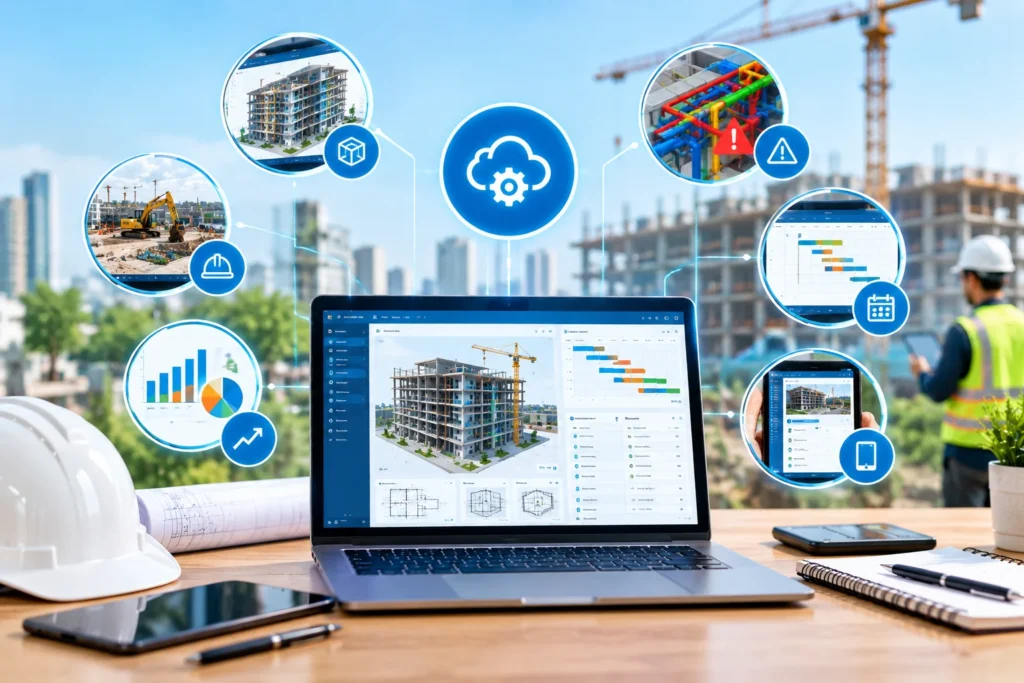
Most teams use a stack consisting of authoring tools to shape geometry/objects, coordination tools to unite models and review clashes, and visualization tools to convey intent. Select based on interoperability (DWG/IFC), collaboration/versioning, and performance on large models.
Implementation Strategy for 3D Modelling in Construction
Successful 3D modelling in construction begins with a small pilot zone and strict standards. A practical rollout looks like:
- Describe deliverables (coordination, visuals, record updates)
- Decide standards (naming, LOD targets, view rules)
- Accept a small content library
- Pilot one zone (one floor/corridor/plant room)
- Organized weekly coordination (model drop + issue log)
- Add QA/QC gates (tolerances, sign-offs)
Prevent common mistakes such as multiple “truth” versions, unreliable objects, and no owner for updates.
Pros and Cons
- Pros: less clashes, clearer intent, fast approvals, better takeoffs, prefab readiness
- Cons: learning curve, governance overhead, model upkeep, hardware demands, risk of over-detailing
Mini Case Examples
In a hospital renovation, above-ceiling congestion and uncertain as-builts can initiate repeated change orders. A focused 3D review on critical corridors facilitates close disputes before shutdown windows.
In a high-rise services tower, 3D modeling construction facilitates align shafts and plant rooms before major procurement, lowering late reroutes and inspection delays.
Future Trends in 3D Modeling Construction
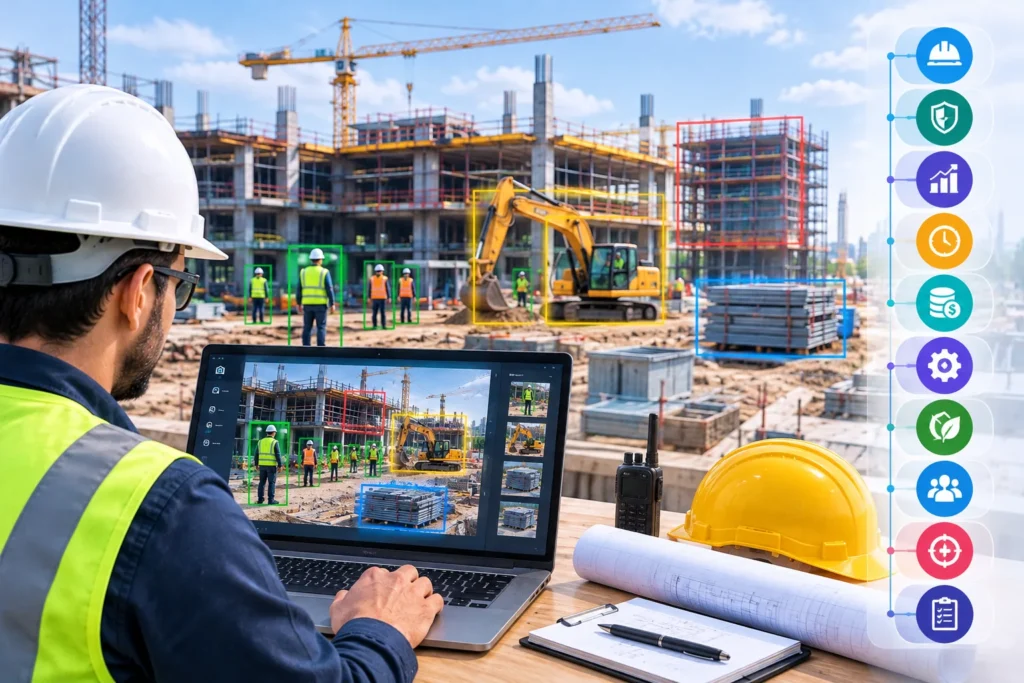
Reality capture (LiDAR/point clouds) is accelerating renovation workflows, and browser-based viewers are making coordination easy for field teams. AI-assisted checks are beginning to identify missing data, risky clearances, and standards issues early. Over time, models will feed digital twins, so that handover data stays usable.
Conclusion
3D modelling in construction decreases costs by preventing errors rather than fixing them later. With standards, coordination cadence, and QA gates, teams naturally cut rework, stabilize schedules, and enhance quantity confidence. InfraTech Hub can support a pilot setup so 3D modeling in construction provides measurable savings, not only better visuals.