Construction is going beyond static models. Owners now need live visibility into asset performance, energy use, maintenance risk, and lifecycle cost. That is why digital twin examples in construction are important. A digital twin connects a physical asset to a dynamic digital model that is fed by data, helping teams monitor conditions, test scenarios, and make better decisions. The opportunity is important: the IEA says buildings consume around 30% of global energy use, while NIST describes digital twins as computer models of physical systems with high potential for accurateness, precision, and flexibility.
What Are Digital Twins in Construction?
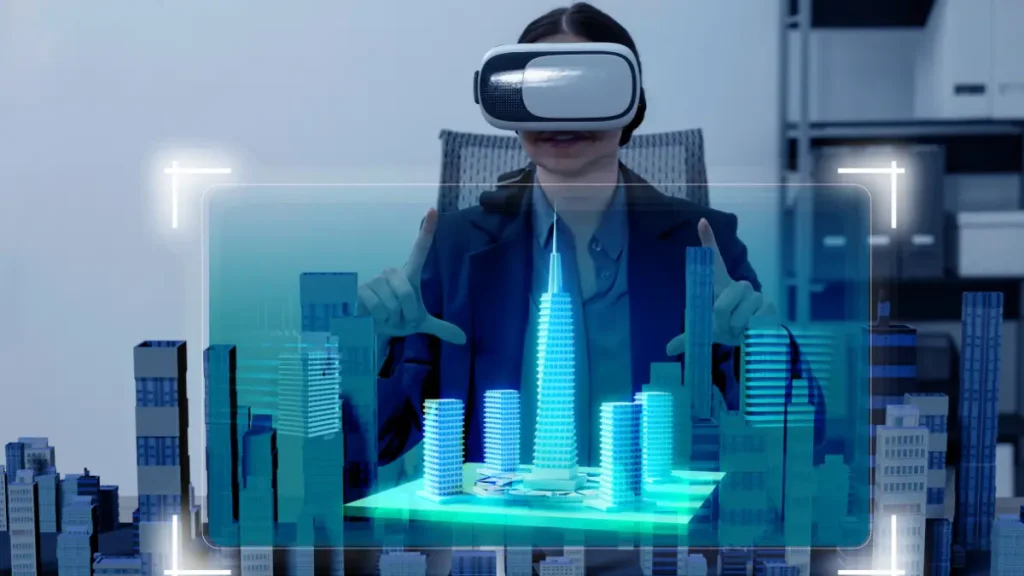
A digital twin is not just a 3D model. In construction, it usually blends BIM or engineering geometry with live or frequently updated data from sensors, building systems, inspections, or asset records. Microsoft describes Azure Digital Twins as a way to generate digital models of real environments like buildings, factories, and cities, while NIST emphasizes their value for simulation, monitoring, optimization, and decision support.
That is why examples of digital twins are helpful. They establish how digital twins help with real project problems, rather than just digital visualization. In practice, they provide support for construction coordination, operational planning, predictive maintenance, energy management, and better long-term asset functioning.
How Digital Twin Technology Works in Construction
The same logic is followed by most of the digital twin technology examples. A project begins with a digital model from BIM, CAD, GIS, or engineering software. Then data from sensors, meters, cameras, scanners, or maintenance systems is linked to that model. The twin then converts into a working environment where teams can compare planned versus actual conditions, recognize risk, and improve decisions. Microsoft observes that Azure Digital Twins provides the modeling backbone for these connected environments.
Top 15 Digital Twin Examples in Construction
1. Singapore’s National Digital Twin
Singapore is widely quoted as one of the strongest city-scale digital twins in construction examples. The World Economic Forum has labelled it as the first nation with a digital twin, presenting how digital models can support urban planning, infrastructure simulation, and policy testing.
2. Singapore’s Net-Zero District Platform
Singapore also displays how digital twins can improve operations. The World Economic Forum reported that its district operations platform is anticipated to cut energy use by 15% to 30% and decrease facilities and security manpower requirements by 50%.
3. Lingang, Shanghai
Lingang is often mentioned in smart-city discussions as a large-scale urban development by means of digital systems for planning and operations. It shows how digital twin examples in construction can spread from buildings to full districts and city infrastructure.
4. Freiburg im Breisgau, Germany
Arup developed a digital city twin for Freiburg that comprised mobility and property-related applications. This is a good example of a twin being used for urban decision-making instead of only asset visualization.
5. Toronto Waterfront Vision
Arup’s digital twin framework also points the Toronto waterfront as a district-scale idea where physical spaces are connected with digital systems and sensor data. It remains a powerful example in conversations about digitally managed urban growth.
6. Eglinton Crosstown West Extension, Toronto
One of the strongest current infrastructure cases is Toronto’s Eglinton Crosstown West Extension. Arup said that its digital twin pilot, developed with Infrastructure Ontario and Metrolinx, is already serving improve efficiency and foresee conflicts before they arise.
7. Neilsoft’s Pune Commercial Building
Autodesk describes features of Neilsoft’s 10-story commercial building in Pune as a smart-building twin that mixes BIM, building systems, and digital twin workflows for improving operational efficiency. This is one of the clearest digital twin technology examples that are building-focused.
8. Sydney Office Building Asset Twin
Autodesk-related material on Willow’s Sydney office building shows how digital twins can authenticate and manage large volumes of asset information during construction. That kind of asset confirmation improves handover quality and future facility administration.
9. EDGE Next Smart Buildings
Microsoft illustrated EDGE Next as a platform using Azure Digital Twins to collect and analyze data from building management systems and sensors. They focus on sustainability, space efficiency, and wellbeing.
10. Dura Vermeer
Autodesk has also mentioned Dura Vermeer’s use of Azure Digital Twins and Autodesk Tandem for improving building management and operational efficiency. This displays how contractors are now using twins beyond design and delivery.
11. Road Corridor Twins
AECOM has defined digital twins for roads as linked asset environments that run from design through construction into maintenance. Roads are strong candidates because they produce continuous condition and operations data over long lifecycles.
12. Dallas Fort Worth International Airport
AECOM has said it facilitated Dallas Fort Worth International Airport to develop a digital twin. Airports are strong use cases because of their operational complication, large asset base, and requirement to maintain service during expansion.
13. City Rail Link, Auckland
Major rail projects such as Auckland’s City Rail Link show how digital engineering is producing the foundation for digital twins in transit delivery. On rail megaprojects, that frequently means better coordination, phasing, and risk visibility.
14. Airport Terminal Operational Simulation
AECOM has also designated BIM-based digital twins for terminal design, where teams can simulate passenger flow and operational performance early and carry that value into later stages. This is one of the most practical case related to “what are some examples of digital twin technology in construction”.
15. Bridge and Civil Structure Twins
Arup notes that bridge teams use scanning, BIM, and digital twin methods for supporting more intelligent design and operation. Bridges are particularly suitable because they require long-term monitoring, maintenance planning, and lifecycle management.
What These Digital Twin Examples Show
One lesson is clear across all these digital twin examples, that the twin generates value only when it is connected to a real use case. In some projects, the goal is energy savings, while in others, it is better mobility planning, conflict discovery, asset validation, or maintenance planning. The best twins are not shaped just to look advanced. They are manufactured to solve measurable problems.
Another lesson is that scale differs. Some twins may serve one office building, while others serve a rail corridor, airport, or even whole city. That means firms must ask what business need they want to resolve before deciding how large the twin should become. NIST also records that digital twin adoption should be assessed through costs and benefits, not software hype.
Cost Savings, ROI, and Budget Considerations
The financial case is one of the major reasons digital twins are gaining consideration. ROI can come from lesser rework, cleaner handover, enhanced maintenance timing, lower energy use, better phasing, and stronger asset decisions. Singapore’s district example is particularly powerful because it links the twin to expected energy and manpower decreases. NIST’s economics work also emphasizes the importance of measuring both costs and benefits when deciding whether acceptance makes sense.
Early planning matters for project budgets. If data standards, BIM structure, sensor needs, and operations needs are aligned from the start, the twin is much more beneficial. If teams wait until closeout, the twin often becomes an costly retrofit with limited value.
Challenges and Future Trends
Even strong “digital twin in construction examples” show some common barriers that include interoperability, poor data quality, cybersecurity, and team readiness. NIST has precisely highlighted that standardization is critical because fragmented systems slow deployment and raises development cost.
Looking ahead, digital twins will become more prognostic and more sustainability focused. AI will help recognize patterns and predict issues, while richer IoT data will advance monitoring and automation. That is important because buildings remain a major energy challenge, and smarter operations can support both cost control as well as decarbonization.
Conclusion
The best digital twin examples in construction display, that the technology is no longer remained in experimental phase. It is already refining how buildings, roads, airports, transit systems, and city districts are planned, delivered, and operated. From Singapore’s city-scale systems to smart buildings in Pune, the message is reliable: digital twins generate the most value when they link live data to real decisions.
For modern infrastructure, that means better visibility, stronger cost control, enhanced lifecycle performance, and more resilient assets. That is why digital twins are becoming one of the most important digital approaches in construction today.