An impressive headset demo can still be the wrong operational tool. Before comparing vendors, decide whether users must leave the physical environment to rehearse a situation or remain inside it while receiving digital guidance. That single decision frames virtual reality vs augmented reality more usefully than screen resolution or marketing language.
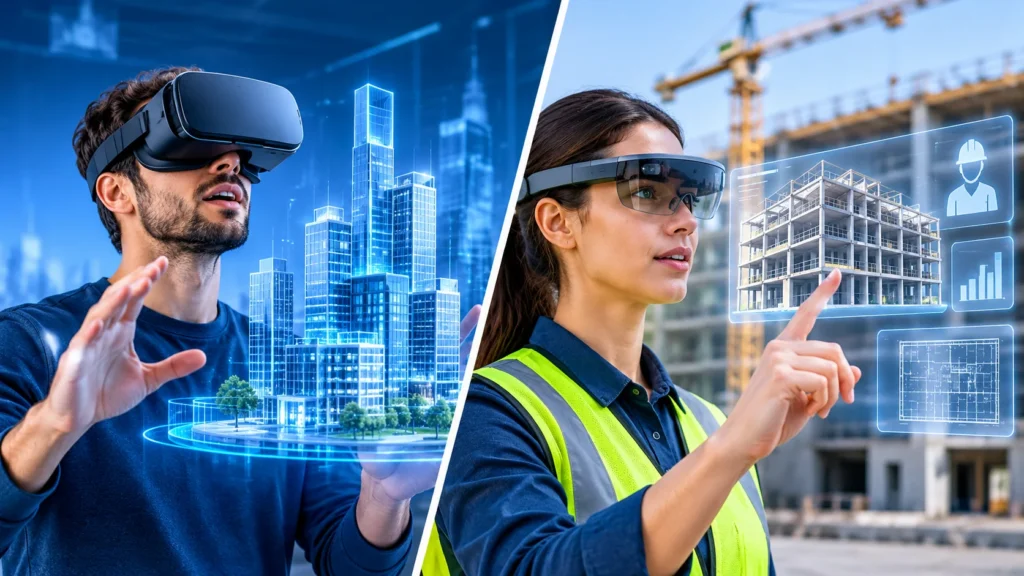
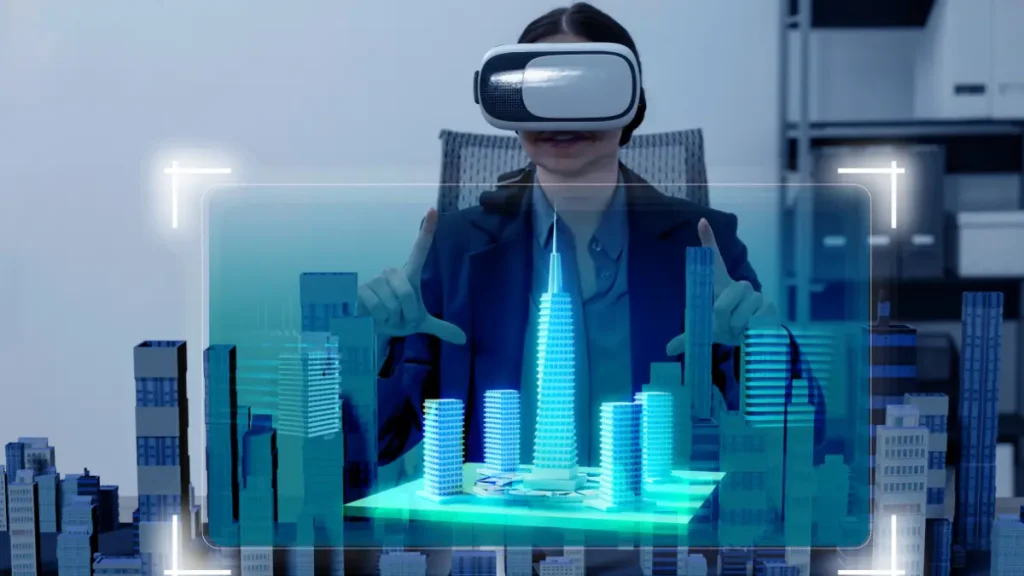
VR replaces the visible surroundings with a simulated environment. AR keeps the real world in view and overlays information onto it. The better choice depends on task, location, risk, data, hardware, comfort, and the consequence of an incorrect digital cue.
What Is the Difference Between Augmented and Virtual Reality?
The OECD’s 2025 primer says AR and MR add digital layers to real settings, while VR creates digital spaces. It treats XR as an umbrella for AR, MR, and VR. Because product boundaries overlap, buyers should specify required behavior instead of trusting a label.
In practical terms, AR supports look at the asset and see relevant data. VR supports enter a controlled replica and experience a scenario. Mixed reality anchors interactive digital objects more deeply within the physical space. The comparison of virtual reality vs augmented reality is therefore a continuum of immersion, not a contest with one universal winner.
Virtual Reality vs Augmented Reality at a Glance
- Environment: VR substitutes a digital scene; AR adds content to the physical scene.
- Hardware: VR generally needs a head-mounted display; AR may use phones, tablets, glasses, or headsets.
- Mobility: AR often supports field movement; VR usually needs a controlled, mapped, obstruction-free area.
- Attention: VR can isolate users for focused rehearsal; AR preserves awareness but can clutter or distract.
- Content: VR requires complete environments; AR requires accurate registration between digital information and real objects.
- Risk: both require privacy, security, accessibility, human-factors, and safe-use controls.
How the User Experience Differs
VR creates presence for scale, sequence, visibility, ergonomics, and rehearsal. Control the physical play area, headset fit, locomotion, and motion discomfort; realistic simulation can still model the wrong procedure.
AR preserves context by placing instructions or asset data near real objects. Validate tracking, occlusion, glare, field of view, battery, and connectivity because a misaligned cue may appear convincing.
When leaders ask what is the difference between augmented and virtual reality, translate the question into task conditions: Is the real environment an essential input? Must users touch physical equipment? Can the area be controlled? Does the experience need full attention, shared awareness, or hands-free operation?
Industry Uses for Virtual Reality vs Augmented Reality
Construction and Infrastructure
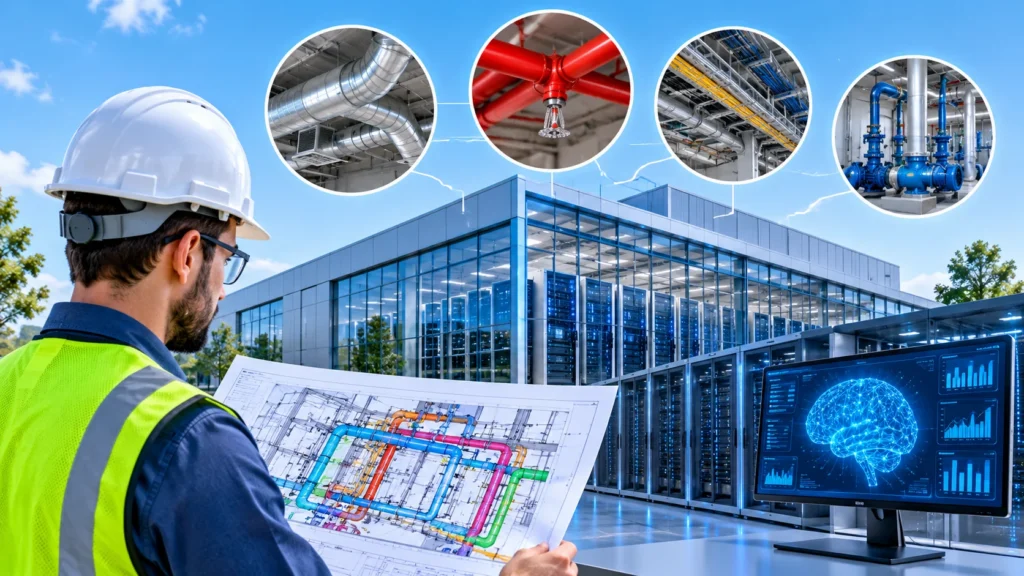
VR supports walkthroughs and rehearsal; AR supports field information and issue location. Structural 3d BIM modelling services must preserve approved geometry, status, coordinates, and references.
Organizations that outsource BIM for infrastructure services should define model purpose, coordinates, level of information need, update cycle, security, and acceptance criteria. Structural 3d BIM modelling services can prepare geometry for immersive review, but elements must carry reliable status and reference information before teams treat them as decision inputs.
NBS reported in 2025 that roughly seven in ten construction professionals use BIM. Yet BIM adoption does not make every model AR- or VR-ready. When firms hire dedicated BIM modelers, they should include optimization, object naming, classification, texture budgets, issue status, version control, and device testing in the assignment.
Manufacturing and Maintenance
Manufacturers use VR for process rehearsal and training; AR can provide work instructions, support, and asset data. NIST framed training amid workforce challenges: 80% of surveyed companies named attracting and retaining workers their leading challenge.
Healthcare and Education
In healthcare and education, what is the difference between augmented and virtual reality becomes a learning-design question: VR rehearses scenarios; AR guides physical tasks. Both require evidence, accessibility, and professional oversight.
Here, virtual reality vs augmented reality should be selected by learning objective. VR fits rehearsal where environmental control and repetition matter. AR fits instruction where the physical patient, instrument, classroom, or laboratory remains relevant. Neither medium corrects weak teaching design or unreliable content.
Retail, Entertainment, and Customer Experience
For retail and entertainment, virtual reality vs augmented reality separates immersive destinations from contextual overlays. Value must outweigh device access, setup friction, and maintenance.
BIM Workflows Behind Immersive Experiences
Immersive AEC delivery begins before export. Source models must be coordinated, georeferenced, appropriately detailed, and stripped of unnecessary geometry or sensitive information. Teams that outsource BIM for infrastructure services should require a controlled pipeline from authoring files to optimized runtime assets, with traceable revisions and defined ownership.
Reliable structural 3d BIM modelling services preserve member identity, dimensions, interfaces, openings, and design status. For field AR, anchors and survey control must match the site. For VR, collision boundaries, navigation, lighting, and interaction should match the review objective rather than merely producing cinematic visuals.
Companies that hire dedicated BIM modelers need more than software operators. The team should understand discipline boundaries, federated coordinates, issue management, model checking, file exchange, and real-time engine constraints. A small validated pilot is safer than converting an entire asset before the workflow is proven.
Evidence from Design and Construction
A 2020 design-and-construction survey analyzed 158 experts and researchers, finding increased AR/VR use between its 2017 and 2018 rounds. This indicates industry interest, not a guaranteed business case for every project.
For virtual reality vs augmented reality, performance should be measured against the existing workflow: decision time, detected issues, task error, training completion, recall, user comfort, rework, and adoption. Record failures and false cues as carefully as benefits.
How to Choose Virtual Reality vs Augmented Reality
- Choose VR when isolation, simulation, scale, rehearsal, or controlled repetition is essential.
- Choose AR when the physical asset, environment, or live task must remain visible.
- Choose neither when input data is unreliable, the task is unsafe for overlays, or simpler media solve the problem.
- Run a pilot with representative users, hardware, lighting, connectivity, protective equipment, and real data.
- Define success measures, stop conditions, content ownership, updates, support, and accessibility alternatives.
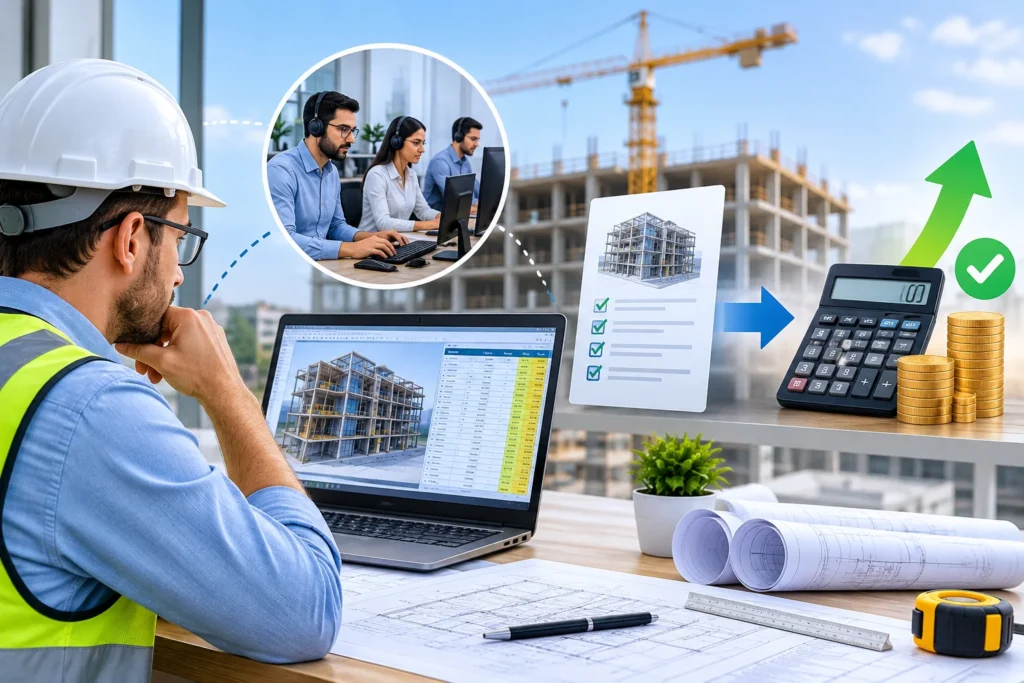
If the implementation depends on BIM, decide whether to outsource BIM for infrastructure services, build internal capability, or use a hybrid team. If you hire dedicated BIM modelers, retain internal authority for requirements, technical approval, safety decisions, and final acceptance.
Privacy, Safety, and Governance
When asking what is the difference between augmented and virtual reality, include data exposure. The OECD warns immersive devices may collect biometric and personal information about users and bystanders, requiring purpose, consent, minimization, access, retention, security, and deletion controls.
During virtual reality vs augmented reality deployment, cover boundaries, supervision, hygiene, breaks, cybersickness, accessibility, and underlying operational hazards. AR must not obscure danger or override authorized procedures.
Common Failure Modes
- Starting with hardware rather than a defined user decision or task.
- Using stale BIM, incorrect coordinates, or unapproved design information.
- Confusing visual realism with technical accuracy or learning effectiveness.
- Ignoring onboarding, comfort, accessibility, content maintenance, and support.
- Scaling before representative users validate the pilot under real operating conditions.
Where models are central, structural 3d BIM modelling services should document assumptions and limitations. Teams that outsource BIM for infrastructure services should also require secure access, named reviewers, change control, and a usable handover package.
Turn Immersion into a Working System
InfraTech Hub can help define the use case, BIM inputs, device constraints, safety controls, and validation plan. Before you outsource BIM for infrastructure services or hire dedicated BIM modelers, confirm what users must see, decide, and verify in the real workflow.
Source Notes
OECD, An Immersive Technologies Policy Primer, 2025: definitions, applications, privacy, security, accessibility, and interoperability
NIST Manufacturing Extension Partnership: AR and VR training within the manufacturing skills challenge
Noghabaei et al., 2020: survey of 158 experts and researchers in design and construction
NBS, Digital Construction Report 2025: BIM adoption and maturity