Complex contracts and continually changing site conditions are some common reasons due to which construction businesses run on tight margins. Industry research and project delivery reviews often mention the same root causes of financial pain: shattered systems, delayed reporting, and weak cost control through multiple projects. That’s why contractors and infrastructure firms that want one connected system for operations and finance are interested in ERP for construction industry on priority basis. Teams use ERP to bring estimating, job costing, procurement, payroll, and project controls into a single workflow rather than tracking spreadsheets and disconnected apps.
What Is ERP for Construction Industry?
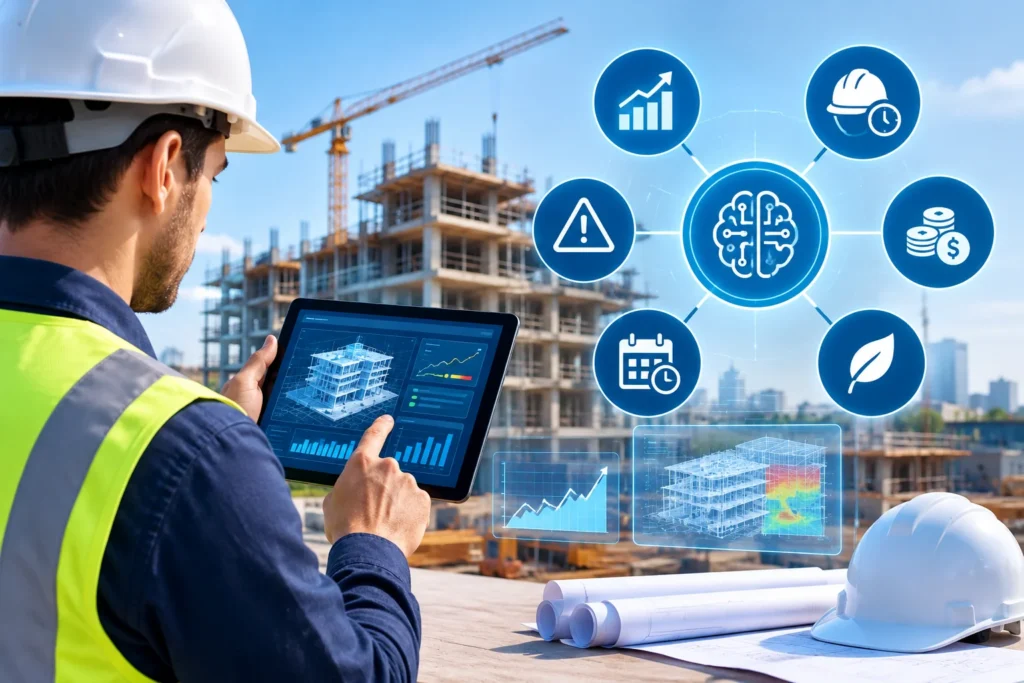
ERP for construction industry is an enterprise resource planning system that is designed explicitly for how construction companies win work, deliver projects, and get paid. If you want to know about what ERP in construction is, then think of it as the “central brain” that links project activity (field labor, materials, equipment, subcontractors, change orders) with financial outcomes (budgets, cash flow, billing, profitability).
A typical construction industry ERP is developed around projects and cost codes, and not products and inventory like many manufacturing ERPs. It helps teams in managing many jobs at once while controlling every cost, commitment, and invoice tied to the right project and scope.
How Construction ERP Works From Field Data to Financial Control
A modern construction ERP works by transforming day-to-day project actions into structured financial data that leadership can entrust. It begins with contracts and project setup, where cost codes, budgets, and billing rules are described. Procurement and subcontract commitments are then connected to those codes, so the system knows what is planned to be spent before invoices even come.
As the project progresses, field timecards, equipment hours, deliveries, and production updates feed the system. Accounts payable matches invoices against purchase orders and receipts submitted by vendors, while subcontract progress claims follow pre-defined approval and retention rules. The ERP then brings up to date job costing, compares committed costs to the budget, and creates forecast-to-complete reports so that teams can see early if the job is drifting. This is the main value of ERP construction: it links what happened on site today to what it means for profit and cash tomorrow.
ERP for Construction Industry vs Generic ERP: What’s Different?
ERP for construction industry is different from generic ERP because construction is project-based, contract-driven, and change-heavy. Generic ERP systems are frequently strong for normal operations, but construction demands explicit controls such as costing of job by cost code, progress billing, retention tracing, change order workflows, and reporting on work-in-progress (WIP).
Construction is also dependent heavily on subcontractors and long supply chains; therefore, subcontract management, lien compliance, certified payroll needs (where applicable), and project-based procurement are common requirements. A construction company ERP should also manage multi-entity operations, joint ventures, and different reporting structures across regions or divisions, all while continuing project controls stable.
Core Modules in Construction ERP Solutions
Financials in Construction ERP Solutions
The financial core conducts general ledger, accounts payable, accounts receivable, and multi-entity consolidation. In construction ERP solutions, finance is not an independent back-office world; it is linked to project controls so management can see financial figures by job, division, and business unit.
Job Costing and Cost Codes in Construction ERP
Job costing is the core of construction ERP. It traces actual costs against the budget at a detailed level, mostly by cost code and cost type (labor, materials, equipment, subcontract). This structure is what makes prediction and profitability analysis possible without guesswork.
Project Management Integration in Construction Industry ERP
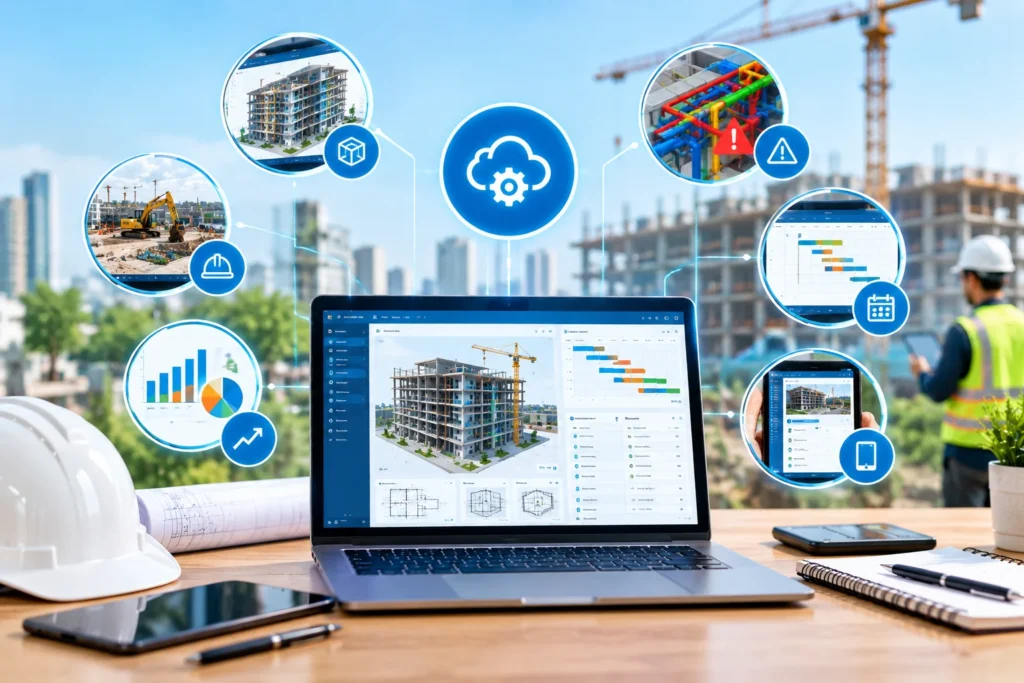
A construction industry ERP often incorporates project management workflows such as RFIs, submittals, change events, and approvals, or it combines with a dedicated project platform. The goal is to connect technical decisions to cost and schedule outcomes, so that changes do not surprise the finance team later.
Estimating and Bid-to-Budget Handoff
Many companies lose margin because the estimate is not turned cleanly into the project budget. Better construction ERP solutions support bid-to-budget handoff by mapping estimate line items into the same cost code structure used for job costing, which enhances variance tracking from day one.
Procurement and Subcontract Management in ERP Construction
Procurement modules control purchase orders, vendor pricing, commitments, and receipts. Subcontract administration supports scope packages, progress claims, retention, compliance documentation, and change order alignment. This is fundamental for controlling committed cost versus budget in ERP construction.
Equipment and Fleet Management
Equipment modules follow utilization, maintenance, internal charge rates, and job allocation. For heavy civil and infrastructure contractors, this can materially change profitability reporting by displaying the actual cost of owning and operating equipment on each project.
Payroll, Time Tracking, and HR
Construction payroll is complicated because labor often leads to the biggest cost risk. Time tracking secured to cost codes helps ensure that labor hits the right scope, and payroll rules can support different job classifications, allowances, and approvals within a construction company ERP.
Reporting, Dashboards, and Analytics
Executives do not want more reports; they demand trusted signals. The best systems provide role-based dashboards that reconcile budget, commitments, actuals, and forecasts so that project teams and finance teams see the same story.
Benefits of Construction Industry ERP
A strong construction industry ERP decreases duplicate data entry by removing re-keying between estimating, procurement, payroll, and accounting. It improves partnership because project teams and finance teams operate from shared budgets, commitments, and approvals instead of conflicting spreadsheets. It also improves governance: approvals, audit trails, and standard workflows decrease surprises and make it easier to manage claims and disagreements.
Most importantly, ERP for construction industry increases quality of decision. When leadership sees correct forecasts early, they can intervene before problems become permanent i.e. renegotiate procurement, accommodate sequencing, add controls, or address productivity issues while there is still time.
Financial Impact: Cost Estimation, Budgeting, Cash Flow, Job Costing, ROI
The financial value of ERP for construction industry starts with precision and stability. When estimating maps into the project budget, teams can track variance constantly rather than debating what the budget “really meant.” Budgeting becomes a living control system that updates as commitments and changes happen, not a static spreadsheet that is stored in a folder.
Cash flow enhances when progress billing, payment applications, retention, and approvals are organized and timely. That is important because construction businesses can be profitable on paper but stressed in cash if billing cycles and collections are slow. With a linked construction ERP, billing can align more closely with verified progress, approved changes, and contract terms.
Job costing and forecasting are where ROI repeatedly becomes visible. Forecast-to-complete reporting shows a comparison of what you planned, what you’ve committed, what you’ve spent, and what you still expect to spend. This early warning method helps decrease cost overruns by detecting drift sooner i.e. rising labor hours, procurement price changes, scope growth, or subcontract variances before they compound.
ROI also comes from less rework and fewer differences between site and finance. When data is taken once and used everywhere, teams waste less time reconciling numbers and more time overseeing outcomes. Over time, profitability progresses because the business learns from its own historical cost data and bids smarter.
ERP Solutions for Different Company Sizes
Small contractors often want a practical construction company ERP that supports job costing, invoicing, basic procurement, and payroll without heavy customization. Easy to use and fast execution usually matters more than advanced analytics.
Mid-sized firms normally need stronger workflow control, multi-project visibility, and combinations with field tools. They also benefit from standardized cost code structures and predictions that can be rolled up by region or division.
Enterprise contractors and owners often need multi-entity consolidation, role-based governance, advanced reporting, and tighter combinations across estimating, project controls, asset supervision, and compliance systems. Cloud ERP can upgrade collaboration and scalability, while on-premises deployments can be chosen for strict internal policies, legacy combinations, or special security requirements.
Implementation Challenges and How to Avoid Them
ERP executions fail more often due to change in management than limitations of software. The major risks are poor data migration, unclear process ownership, and users lingering on old habits in parallel systems. A phased rollout helps standardize cost codes, clean master data, train power users first, and define “source of truth” rules so that teams know where to enter and trust information.
Planning for integration is also critical. If field teams have to enter the same data multiple times, adoption drops quickly. Success usually comes from streamlining workflows, not adding complexity, and from measuring adoption through forecast precision, billing cycle speed, and variance visibility.
Future Trends in ERP Construction
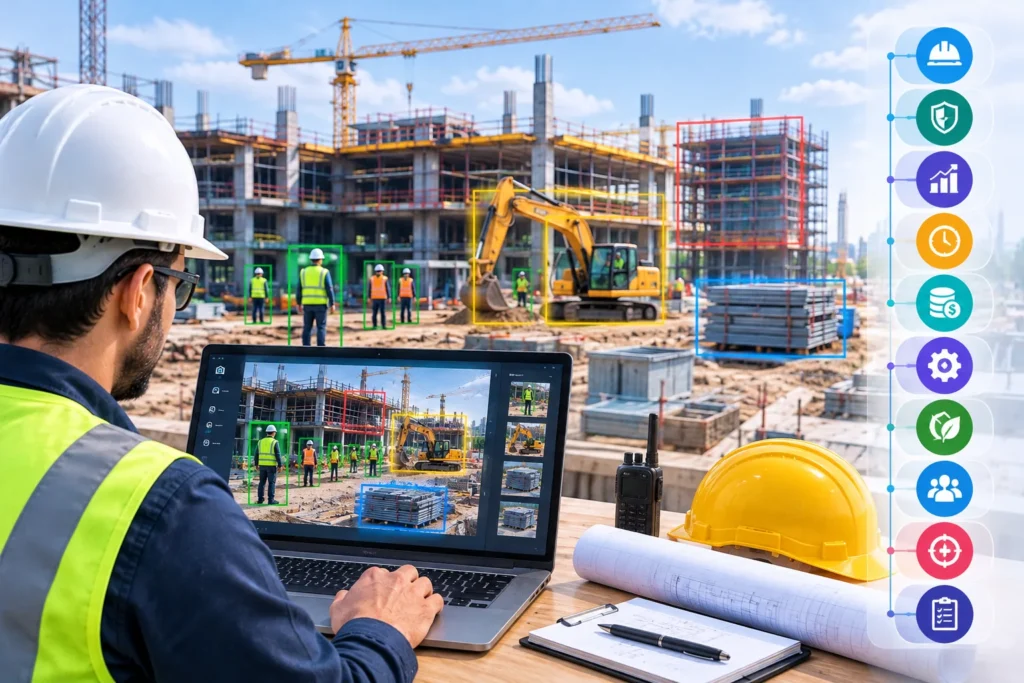
The future of ERP construction is more field-linked and more predictive. Mobile-first capture will continue to tighten the linkage between site reality and financial reporting. AI-assisted forecasting emerges to flag abnormalities, highlight risk patterns, and suggest corrective actions beforehand. Combination with BIM, document control, and connected equipment data will also grow, because project outcomes increase when schedule, quantities, and cost signals reinforce each other instead of opposing.