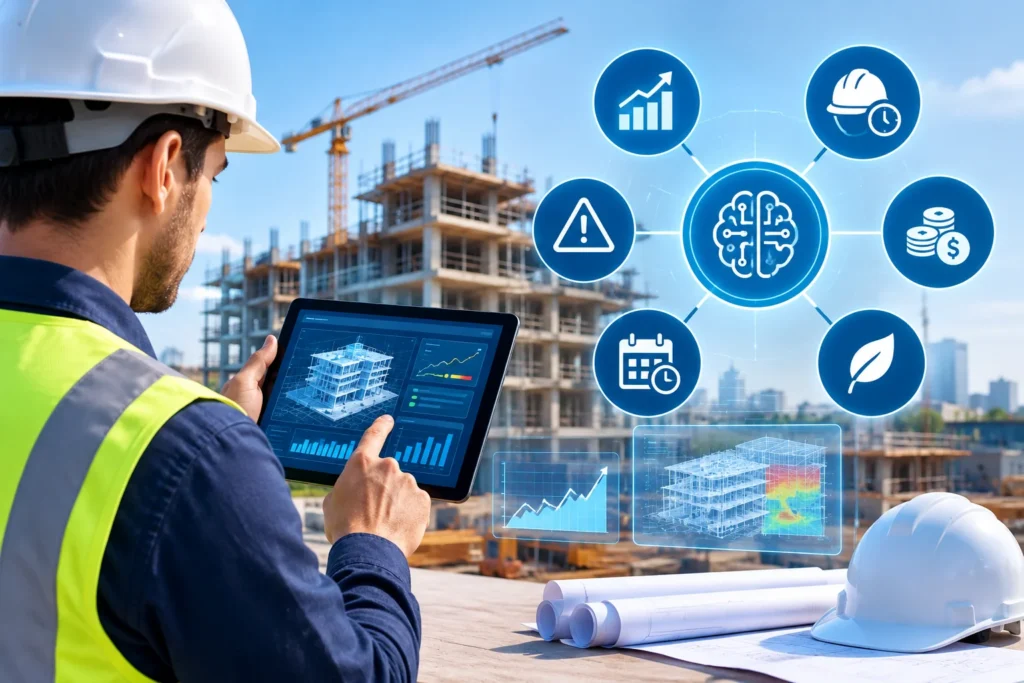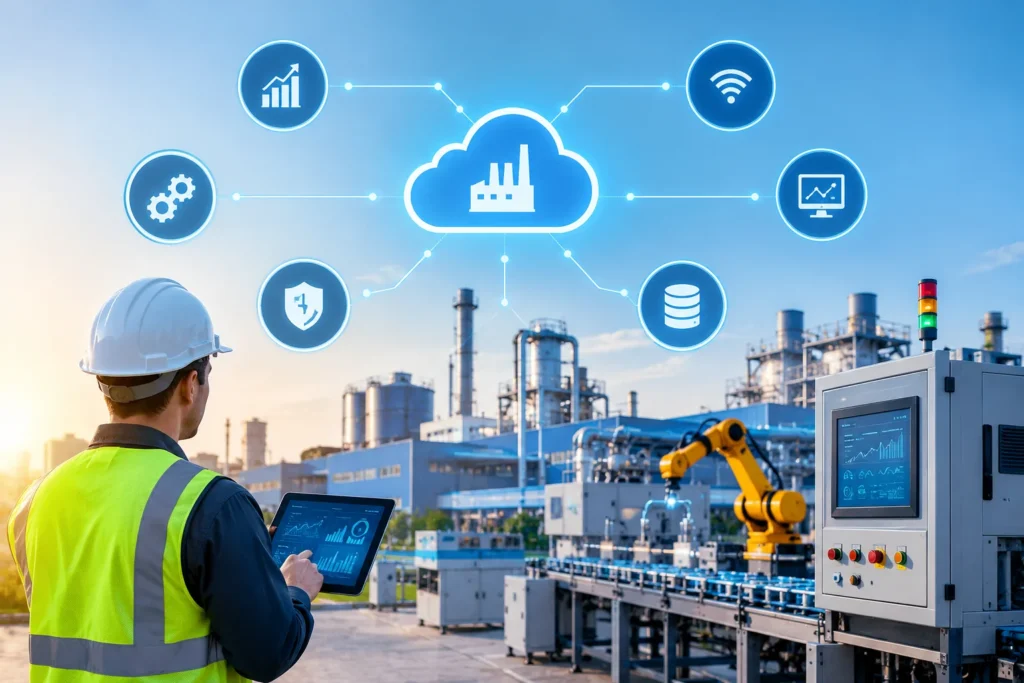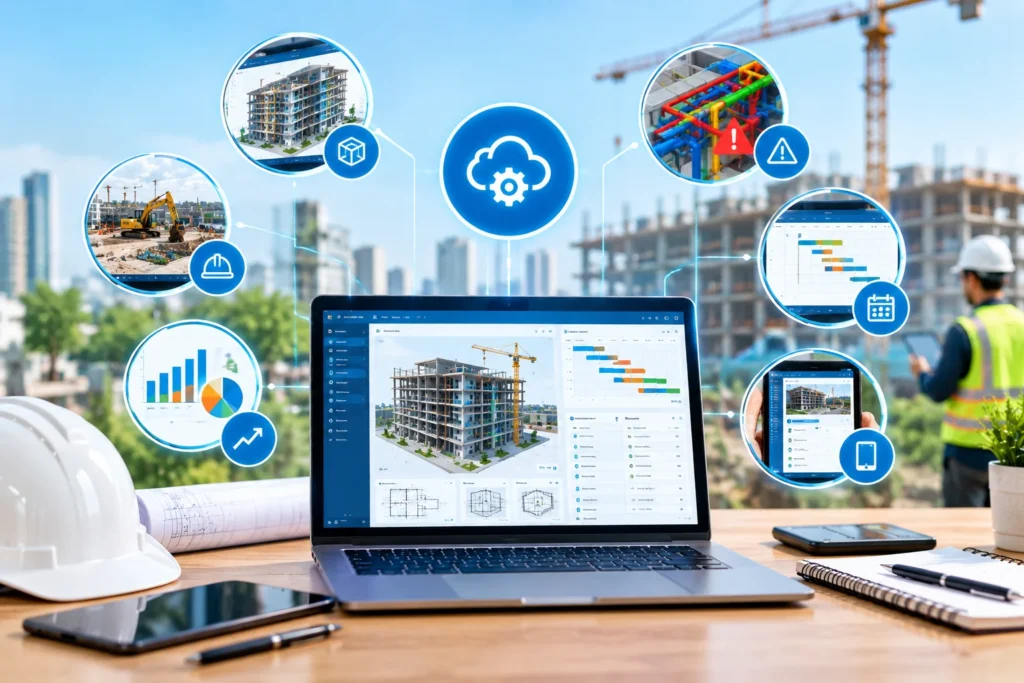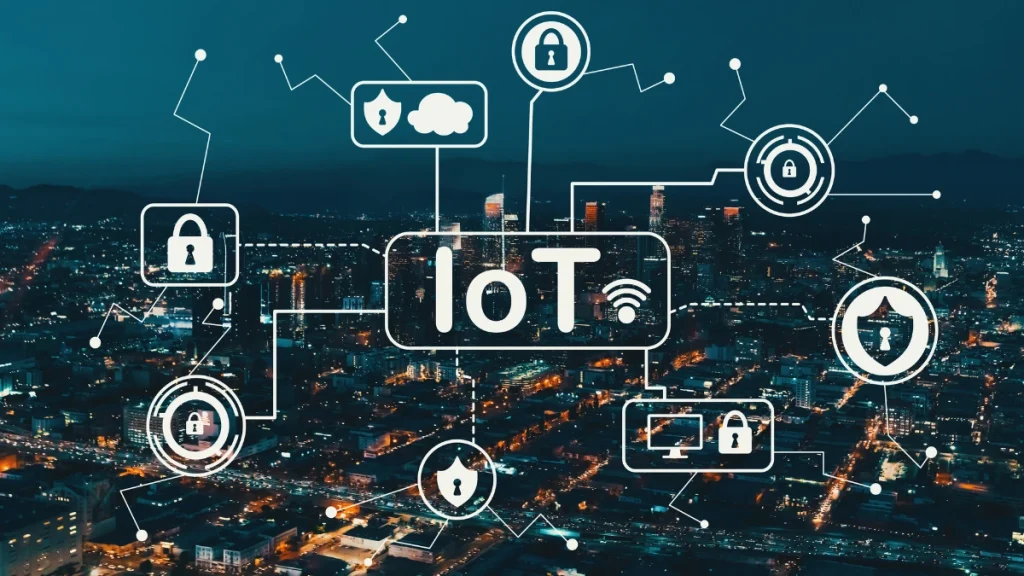
Consistently the same lesson is shown by smart buildings, utilities, and industrial sites, and field deployments that “better decisions start with better measurements”. As more infrastructure portfolios implement connected monitoring, teams are using different types of sensors in IoT to improve uptime, moderate energy waste, and earlier detection of failures. Adoption trends also show that sensor costs are dropping while sensor networks are scaling fast, making data-driven operations more practical for smart systems of all sizes.
Types of Sensors in IoT: The Core Concept
The different types of sensors in IoT refer to the different sensor categories which are used to capture real-world signals i.e. temperature, vibration, pressure, location, air quality, energy usage, and convert them into digital data for monitoring and automation.
In simple terms, sensors in IoT perform three tasks:
- Sense physical condition (heat, motion, force, light, gas)
- Convert it into a measurable signal (voltage/current/digital value)
- Transmit it to a gateway/platform for analysis and action
Because smart systems depend on continuous feedback, choosing the right types of IoT sensors can decide whether your project becomes precise and useful or noisy and unreliable.
Sensors in IoT Explained
For selecting the right types of sensors in IoT, you need to know basic technical terms. This avoids common mistakes like buying a sensor that looks good on paper but fails in the field.
Key Sensor Terms
- Sensor vs transducer
- A sensor measures quantity.
- A transducer converts one form of energy to another (often physical to electrical). Many sensors also include a transducer.
- Accuracy
- How close the reading is to the real value.
- Precision
- How repeatable the sensor is (reliable readings).
- Resolution
- The smallest change the sensor can discover.
- Sensitivity
- How many output changes are needed for a given input change.
- Sampling rate
- How often does the sensor record data (e.g., 1 Hz = once per second).
- Calibration
- Altering the sensor to match known standards.
- Drift
- Sensor readings shift slowly over time, even if conditions don’t change.
- Noise
- Random variations that can alter readings.
- IP rating
- Protection against dust and water (e.g., IP65 for dust-tight and water jets).
- Power consumption
- Critical for battery sensors and remote deployments.
These factors affect quality of data. Poor data quality makes analytics inaccurate, even if you use advanced platforms, digital twins, or machine learning.
Different Kinds of Sensors
There are many different kinds of sensors, but most IoT deployments are divided into a few practical categories. Below is a clean map of the main types of sensors in IoT with typical examples.
1) Environmental Sensors
- Temperature, humidity, barometric pressure
- Air quality (CO₂, VOC, PM2.5/PM10)
- Noise level, light intensity, rainfall, wind
2) Motion and Presence Sensors
- PIR motion sensors
- Accelerometers and gyroscopes
- Occupancy and people counting (privacy-safe options exist)
3) Location and Tracking Sensors
- GPS trackers
- BLE beacons, RFID tags
- UWB (high-accuracy indoor positioning)
4) Mechanical and Condition Monitoring Sensors
- Vibration sensors (bearing/motor health)
- Strain gauges (structural loads)
- Tilt/inclinometer sensors (slope and movement)
5) Fluid and Process Sensors
- Flow meters (ultrasonic, electromagnetic, turbine)
- Pressure sensors
- Level sensors (radar, ultrasonic, float)
6) Electrical Sensors
- Current sensors (CT clamps, Hall effect)
- Voltage sensors
- Power quality meters (harmonics, sag, frequency)
7) Chemical and Safety Sensors
- Gas sensors (CO, CH₄, H₂S)
- Water quality (pH, turbidity, conductivity)
- Smoke/fire detection (where applicable)
When people search for “lot sensors,” they often mean “IoT sensors” (a common typo). Treat lot sensors as an alternate search phrase, but remain focused for your selection on real sensor categories, deployment needs, and data quality.
Internet of Things Temperature Sensors
Internet of things temperature sensors are among the most common because temperature affects performance of equipment, safety, comfort, and energy use.
Here are the most used temperature sensor types and where they fit:
- RTD (Resistance Temperature Detector)
- High accurateness and stability
- Used in industrial processes, HVAC plants, and critical equipment monitoring
- Thermocouple
- Temperature range is wide
- Used in high-heat industrial environments and furnaces
- Thermistor
- Very sensitive in a narrow range
- Used in consumer devices and some HVAC applications
- Digital temperature sensors
- Easy incorporation, good for IoT nodes
- Used in smart buildings, cold storage, and remote asset monitoring
Best Practices for Temperature Deployments
- Set sensors away from direct sunlight and heat sources (unless measuring them)
- Use proper thermal contact for equipment readings
- Consider drift and recalibration schedules for critical assets
When you’re assessing types of sensors in IoT, temperature sensors are repeatedly the fastest route to measurable ROI in energy and maintenance.
IoT Smart Sensors
IoT smart sensors are sensors that do more than just to measure. They can filter noise, apply basic logic, and sometimes also run lightweight analytics at the edge.
Why IoT Smart Sensors Matter:
- Decrease bandwidth by sending only meaningful events
- Improve consistency during connectivity outages
- Enable fast local responses (low latency)
- Extend battery life with efficient reporting
Examples of Smart Sensor Behaviors:
- Event-based reporting (send only when a threshold is crossed)
- Rolling averages and anomaly flags at the sensor level
- Local “health checks” like battery and signal quality
This is ever more important when deploying different types of IoT sensors across large portfolios where connectivity and maintenance access are limited.
Industrial Sensor Types in IoT
Industrial sensor types in IoT focus on consistency, ruggedness, and measurable process outcomes. Compared to normal smart building sensors, industrial sensors generally need better sealing, wider temperature ranges, and stronger calibration routines.
Common Industrial Sensor Types in IoT are:
- Vibration sensors
- Discover imbalance, misalignment, bearing wear
- Pressure sensors
- Examine pumps, pipelines, compressors, hydraulic systems
- Flow sensors
- Trail water, steam, gas, and chemical flows
- Current and power sensors
- Monitor motor load, detect abnormal consumption, prevent overload
- Proximity sensors
- Discover presence/position of components in automation lines
- Gas sensors
- Increase safety in plants, tunnels, and confined spaces
Industrial Deployment Checklist
- Confirm IP rating and enclosure needs
- Confirm temperature range and chemical resistance
- Plan calibration and maintenance access
- Describe sampling rate based on the physics (vibration needs higher sampling than temperature)
Engineering Applications of IoT Sensors
The engineering applications of IoT sensors are expanding quickly because infrastructure owners want considerable visibility into asset condition, performance, and risk.
High-impact engineering applications of IoT sensors contain:
- Bridge and structural health monitoring
- Strain, vibration, tilt, crack monitoring
- Road and pavement monitoring
- Deflection sensors, traffic counters, environmental sensors
- Water networks
- Flow and pressure sensors for leak detection and NRW reduction
- Power grids
- Transformer temperature, vibration, partial discharge signals (where applicable)
- Rail and transit
- Track vibration, axle counters, environmental sensors in tunnels/stations
These sensors in IoT facilitate operators to shift from periodic inspections to continuous monitoring, specifically for critical assets with high failure impact.
Sensors for Infrastructure Investment Monitoring
Sensors for infrastructure investment monitoring sustain smarter budgeting and better lifecycle decisions. Portfolios can use condition signals and performance KPIs instead of trusting only on age-based replacement.
How sensors for infrastructure investment monitoring help decision-makers:
- Find assets that are “old but healthy”
- Identify assets that are “new but failing”
- Prioritize maintenance that is based on risk and impact
- Track improvements in performance after upgrades
- Confirm ROI with measurable before/after comparisons
Practical metrics you can measure
- Downtime hours decreased
- Energy amount (kWh per unit output)
- Leak loss volume decreased
- Maintenance cost per asset
- Incident response time
When teams connect types of sensors in IoT to asset registers and dashboards, the data becomes a planning tool—not just a monitoring tool.
How to Choose the Right Types of IoT Sensors
Here’s a clear process for choosing different types of sensors in IoT without overspending or under-specifying.
Step-by-step selection method
- Define the outcome
- What decision will this sensor support (alerts, optimization, compliance)?
- Select the measurement
- Temperature, vibration, flow, pressure, air quality, energy, location
- Set performance requirements
- Accuracy, resolution, sampling rate, response time
- Check environmental constraints
- IP rating, temperature range, chemicals, vibration, UV exposure
- Choose power and connectivity
- Battery vs wired, LoRaWAN vs cellular vs Wi-Fi vs Ethernet
- Plan data quality
- Calibration schedule, drift checks, installation standards
- Validate with a pilot
- Field test for noise, false alarms, placement issues
- Scale with templates
- Standardize sensor models, tagging, and installation guides
This structured approach guarantees your types of IoT sensors match real operational needs.
Pros, Cons, and Maintenance Checklist
Pros of Using IoT Smart Sensors and Sensors in IoT
- Better visibility and fast response
- Decreased downtime through early warnings
- Better energy and process efficiency
- Stronger safety monitoring
- Reliable lifecycle planning using real data
Cons and Limitations
- Data quality issues can decrease trust
- Sensors require maintenance and calibration
- Connectivity gaps can result in missing data
- Mixing into workflows takes planning
Maintenance and Calibration Checklist
- Inspect physical mounting (loose mounting ruins vibration data)
- Clean environmental sensors (dust affect readings)
- Check drift using reference measurements
- Verify battery health and signal quality
- Review alert thresholds seasonally
- Maintain installation documentation and asset tags
If you consider different types of sensors in IoT as “install once and forget,” results will degrade. If you treat them as assets with maintenance plans, performance stays trustworthy.
Conclusion
The different types of sensors in IoT are the foundation of smart systems. When you recognize different kinds of sensors, match them to actual outcomes, and maintain data quality, you can develop monitoring that drives real operational value. Whether you’re deploying industrial sensor types in IoT, optimizing buildings with IoT smart sensors, or using sensors for infrastructure investment monitoring, the best results come from clear KPIs, proper installation, and structured rollout.