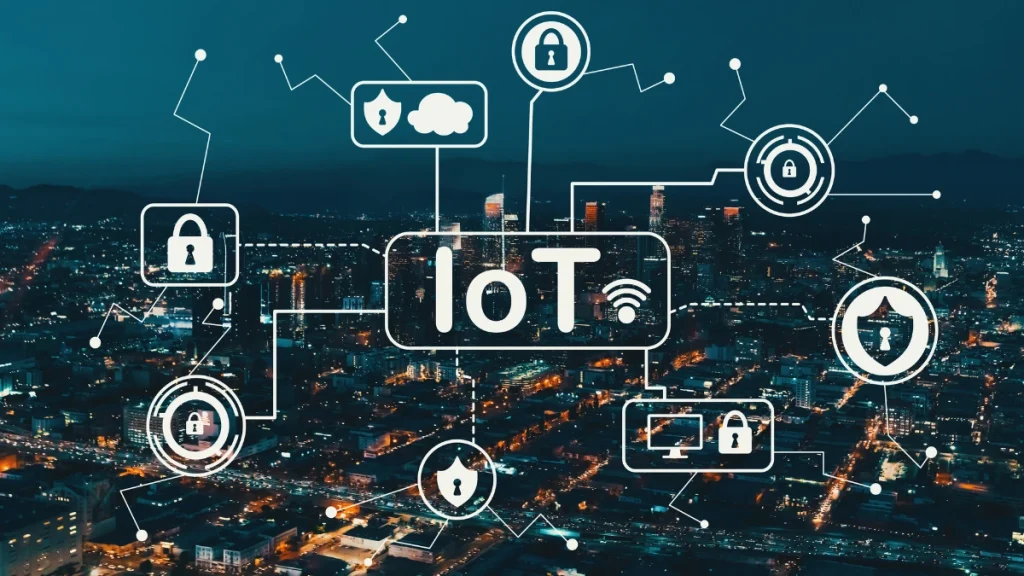
Although modern IoT deployments are growing at a fast speed across smart buildings, utilities, factories, and fleets, yet many projects struggle after pilot stage because operations become messy at scale. That’s the reason that teams ask “what is device management in IoT” and how it helps keep thousands (or millions) of connected devices secure, updated, and consistent. Industry guidance from security and standards bodies (like NIST-style practices) consistently highlights lifecycle control, identity, monitoring, and patching as fundamental requirements for operating connected systems safely and cost-effectively. In this guide, we’ll break down device management in practical terms and describe why it’s foundational for long-term IoT system management.
What Is Device Management in IoT?
What is device management in IoT? It is the set of processes, tools, and policies which are used to onboard, configure, monitor, secure, update, and retire IoT devices throughout their entire lifecycle, without requiring to physically touch every device.
Imagine device management as the “operations backbone” for connected hardware. It answers questions like:
- How do we add 5,000 sensors safely without manual setup?
- How do we know which devices are online, healthy, or failing?
- How do we rotate keys, enforce policies, and stop unauthorized access?
- How do we push firmware updates (OTA) without breaking devices?
- How do we decommission devices so they can’t rejoin the network?
In short, IoT device management makes connected deployments which are manageable, secure, and scalable.
Device Management and the Internet of Things Is Important Because…
Device management and the internet of things is important because IoT is not like to “set it and forget it.” Devices live in the real world i.e. on poles, rooftops, factories, basements, vehicles, and remote sites and they keep on changing over time. Batteries degrade, networks fluctuate, firmware gets outdated, and security threats may also evolve.
Here’s what happens when device management is weak:
- Devices get deployed with default credentials or unreliable configuration
- “Ghost devices” remain registered though they are removed in the field
- Firmware liabilities remain unpatched due to update complexity
- Troubleshooting involves manual visits, raising OPEX drastically
- Data quality drops because failing sensors may not be noticed for weeks
That’s why device management and the internet of things is important because it changes IoT from a risky experiment into a dependable operational system.
IoT Device Management Features That Keep Systems Stable at Scale
Strong IoT device management features maps to the lifecycle of a device, from onboarding till retirement. Below are the core features you should expect in a mature management.
1) Provisioning and Onboarding
Provisioning is how a device becomes a trustworthy member of your system.
Key capabilities:
- Exclusive device identity (device IDs, certificates, hardware-backed keys)
- Reliable enrollment (QR-based onboarding, pre-provisioned certificates, or claim codes)
- Automatic assignment to groups (by site, asset type, or region)
- Policy templates to be applied during enrollment (network rules, telemetry intervals)
Why it concerns: If onboarding isn’t standardized, every new rollout becomes a manual project i.e. slow, error-prone, and insecure.
2) Configuration Management
Configuration management guarantees devices behave consistently.
Common configuration tasks:
- Setting rates of sampling (e.g., temperature every 30 seconds)
- Adjusting thresholds for alerts
- Renovating network settings (APN, Wi-Fi, gateway routes)
- Enabling or disabling certain sensors/features
Best practice is “configuration as policy,” where device groups inherit settings automatically rather than trusting on one-off manual edits.
3) Security Management
Security is not a single feature; it’s an ongoing operational discipline.
Important security capabilities:
- Authentication and authorization (device identity, role-based policies)
- Certificate/key rotation (scheduled, automated if possible)
- Encryption in transit (TLS) and secure storage of secrets
- Secure boot concepts (device starts only with trusted firmware)
- Network segmentation and least-privilege access
This is where IoT system management and security operations collaborate: devices must be controlled like endpoints and not treated like disposable sensors.
4) Monitoring, Telemetry, and Health Management
Monitoring is how you keep visibility into device health and data consistency.
What to monitor:
- Status of connectivity (online/offline, signal strength, latency)
- Usage of resource (battery, memory, CPU for gateways/edge devices)
- Sensor abnormalities (flatlines, spikes, drift, missing intervals)
- Error logs and diagnostic codes
Useful outputs:
- Health dashboards by site and device type
- Automated alerts (email/SMS/app notifications for critical failures)
- Predictive patterns (early warning based on battery decline or error rates)
5) OTA Updates
OTA (Over-The-Air) updates are one of the most important IoT device management features because vulnerabilities and bugs are unavoidable.
Good OTA update design includes:
- Phased rollout (pilot group → broader rollout)
- A/B update concept (two partitions so the device can fall back)
- Rollback capability (revert if update fails)
- Update integrity checks (signatures, version validation)
- Clear audit trail (who updated what, when, and why)
Organizations delay updates without safe OTA, and delayed updates become security incidents.
6) Remote Commands, Automation, and Policy Enforcement
Remote actions decrease field visits and speed up response.
Examples:
- Restart a device or gateway from remote
- Initiate diagnostics and collect logs
- Apply a change in policy to a whole site group
- Lock down devices if suspicious behavior is revealed
Automation is the multiplier: you don’t want to “manage devices,” and you want the system to manage itself based on rules.
7) Decommissioning and End-of-Life Control
Decommissioning is repeatedly forgotten until it becomes a risk.
A solid process comprises:
- Canceling certificates/keys
- Eliminating devices from allowed network lists
- Erasing sensitive configuration
- Updating asset inventory and audit records
These actions block retired devices from reappearing as backdoors into your environment.
IoT Remote Device Management Examples Across Industries
A big reason that IoT device management matters is because devices are distributed. Remote operations decrease downtime, improve safety, and control costs. Here are practical IoT remote device management examples across industries.
Smart Buildings
- Problem: Temperature sensors drift and HVAC performance degrades.
- Remote action: Push calibration parameters + update alert thresholds.
- Outcome: Better comfort, lower energy waste, fewer site visits.
Utilities
- Problem: Some meters drop offline due to cellular changes or weak signal.
- Remote action: Adjust reporting intervals, update modem firmware OTA, switch fallback network profile.
- Outcome: Fewer data gaps and faster restoration of visibility.
Manufacturing
- Problem: A gateway’s storage is filled with logs; sensors show intermittent errors.
- Remote action: Trigger diagnostics, rotate logs, apply patched firmware, and tune telemetry.
- Outcome: Reduced unplanned downtime and faster root-cause analysis.
Transportation and Fleet
- Problem: Cold-chain sensors in delivery trucks show inconsistent temperature readings.
- Remote action: Update sampling rate, push a firmware fix, and adjust alert rules for route context.
- Outcome: Better compliance reporting and fewer spoiled goods.
Healthcare
- Problem: Home devices lose connectivity and stop transmitting readings.
- Remote action: Remote troubleshooting workflow + connectivity reset + safe OTA update.
- Outcome: Improved continuity of monitoring with less support overhead.
Agriculture
- Problem: Battery devices must last months; connectivity is unreliable.
- Remote action: Tune power profiles, reduce transmission frequency, push lightweight OTA fixes.
- Outcome: Longer battery life and more stable field coverage.
These IoT remote device management examples illustrate a common pattern: real value comes after deployment, when you can maintain performance without costly manual intervention.
IoT Device Management vs IoT System Management
People frequently mix these concepts, but they’re different layers.
Focus of IoT device management is on the device lifecycle and control:
- Identity, onboarding, configuration
- OTA updates and firmware integrity
- Device health, logs, and remote commands
- Key rotation and endpoint security posture
- Decommissioning and asset tracking
IoT system management is broader, and it includes:
- Data pipelines, storage, and analytics
- Application uptime and service monitoring
- User access, workflows, and business rules
- Integration with CMMS/ERP/BMS/SCADA platforms
- Governance, reporting, and SLA performance
In practice, device management is a central pillar of IoT system management. If devices aren’t stable and safe, system-level dashboards and analytics become unreliable.
Common Challenges in IoT Device Management
Even with good tools, IoT introduces unique operating challenges:
- Scale: Thousands of devices amplify small issues into major incidents.
- Heterogeneity: Different hardware vendors, protocols, and firmware behaviors.
- Connectivity variability: Offline periods are normal, not exceptional.
- Power constraints: Battery devices can’t “chat” constantly.
- Security and compliance: Long-lived endpoints attract attackers over time.
- OTA risk: Updates can fail mid-transfer; rollback must be planned.
- Inventory drift: What’s installed in the field may differ from records.
Best Practices for Reliable IoT System Management
Use these best practices to make IoT device management durable in the real world:
- Standardize onboarding: Certificates, claim codes, and policy templates.
- Group devices by context: Site, device type, criticality, and owner team.
- Design for offline-first behavior: Queue commands, sync on reconnect.
- Implement least privilege: Devices get only the permissions they need.
- Secure OTA from day one: Signed firmware, staged rollout, rollback.
- Observability matters: Health metrics + logs + alerts with clear thresholds.
- Automate routine ops: Key rotation, policy enforcement, anomaly detection.
- Maintain an auditable inventory: Map device IDs to physical assets and locations.
These practices are supportive of both IoT device management features and the wider goals of IoT system management.
Future Trends in IoT Device Management
What’s coming next is more automation and tighter convergence:
- AI-assisted operations: Perceive anomalies, predict failures, recommend actions.
- Digital twins for devices: Richer models of device state, configuration, and history.
- Zero trust IoT: Strong identity + continuous verification + segmentation.
- Edge management convergence: Managing gateways and edge apps like cloud services.
- Standard ecosystems: More interoperability via emerging standards and shared tooling.
As IoT spreads, the operational advantage will belong to teams who can manage fleets of devices as consistently as modern cloud infrastructure.